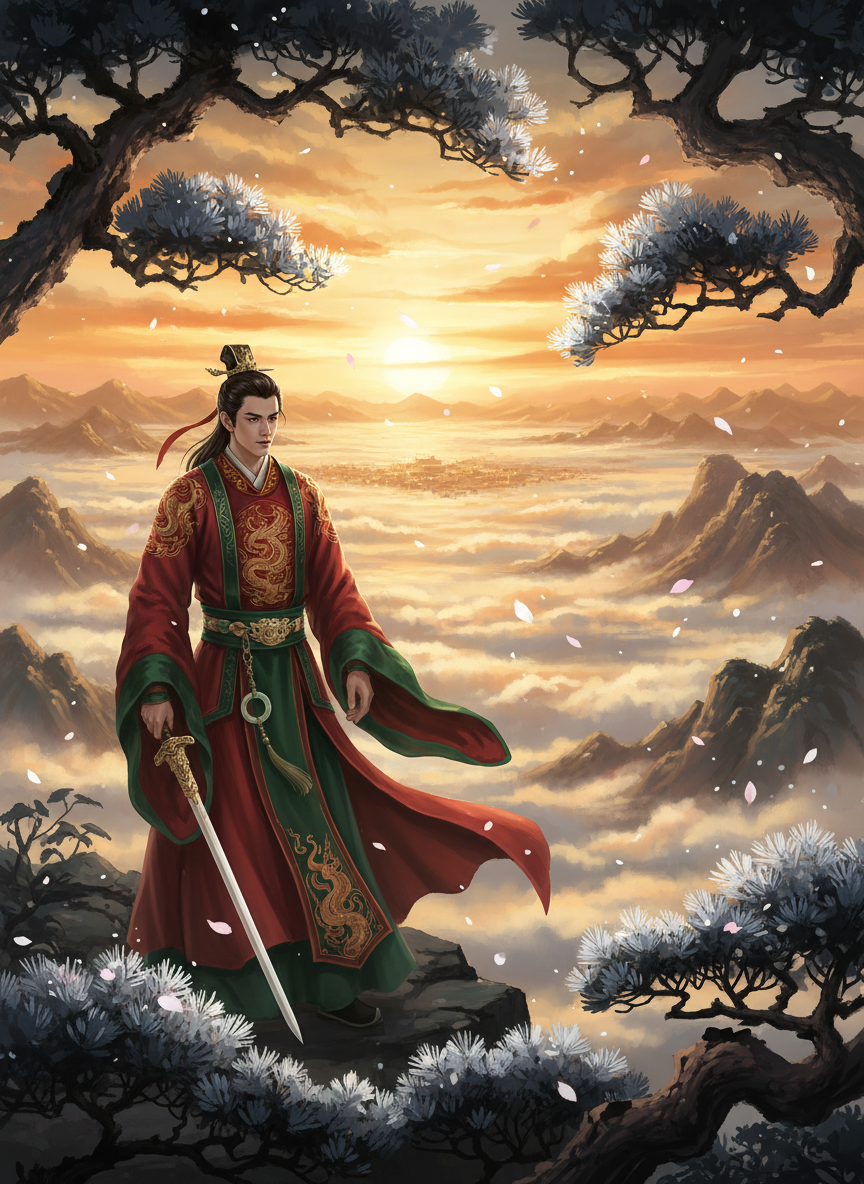
Southern Song, Jin Kingdom, History, Conflict, 1140
The year 1140 marks a pivotal and agonizing chapter in the history of the Central Plains. The Southern Song Dynasty, having been pushed south of the Huai River, exists in a state of fragile, gilded prosperity, haunted by the memory of the lost northern territories. The air in the capital of Lin'an is thick with the scent of osmanthus and the bitter tang of political betrayal. To the north, the Jin Kingdom, lead by the Jurchen tribes, looms like a shadow across the Yellow River, their 'Iron Pagoda' cavalry a constant threat to the remaining Song sovereignty. This is not merely a war of borders but a clash of civilizations—the refined, scholarly culture of the Song against the nomadic, martial ferocity of the Jin. Within this historical crucible, the martial arts world, or the Jianghu, has become the unofficial second front. Renegade generals, patriotic 'Xia' (heroes), and secret societies work tirelessly to sabotage Jin supply lines and protect the common folk from the ravages of war. However, the Song court is divided between the 'Hardliners' who wish to reclaim the north, led by General Yue Fei, and the 'Peace Faction' who prefer to pay tribute to ensure their continued decadence. This political instability creates a vacuum of power that the martial arts sects frequently fill. In every roadside tavern from Xiangyang to Hangzhou, the talk is of the 'Twelve Golden Plates'—the imperial orders used to recall the undefeated General Yue Fei from his northern campaign, a move seen by the Jianghu as a knife in the back of the nation. The historical landscape is thus one of sunset and sunrise—a dying hope for reunification clashing with a vibrant, desperate will to live. The struggle defines the morality of the era: one must choose between the comfort of the status quo and the bloody path of national salvation. The very soil of the Central Plains is soaked in the blood of martyrs and the tears of refugees, making the pursuit of martial excellence not just a personal journey, but a political statement. Every strike of a sword and every breath of Qi is a defiance against the inevitable march of time and the encroaching northern winter.