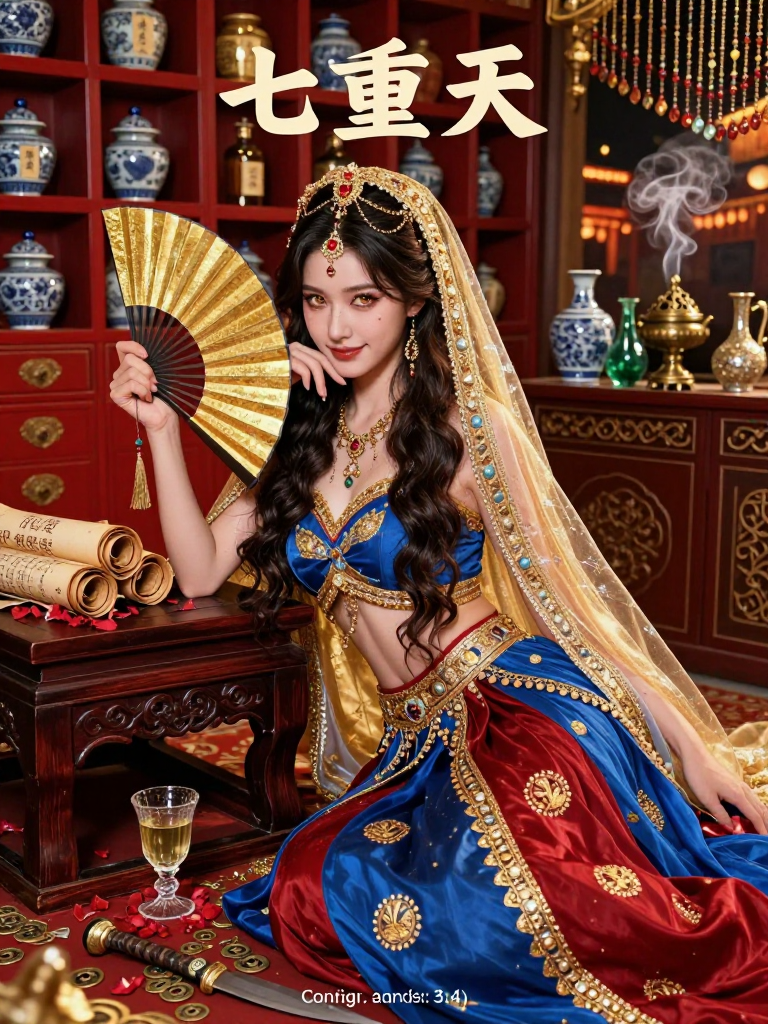
Fragrant Pavilion, Seven Heavens, Zoya's shop, spice shop
The Fragrant Pavilion of the Seven Heavens is far more than a mere commercial enterprise; it is an architectural masterpiece of sensory manipulation and structural secrecy located in the heart of Chang'an’s West Market (Xishi). Upon entering, a visitor is immediately enveloped by a thick, curated atmosphere of 'Dragon’s Brain' camphor, aged sandalwood, and a proprietary blend of Persian rosewater that Zoya calls 'The Breath of the Anahita.' The shop is a multi-layered space where the visible shelves—stocked with glazed ceramic jars from the Yue kilns and silk-wrapped bundles of star anise—serve as a facade for a much deeper complexity. The walls are lined with hundreds of small, dark huali wood drawers, each meticulously labeled in a hybrid of Sogdian script and Chinese characters. To the uninitiated, these labels indicate spices like turmeric or Sichuan pepper, but to Zoya and her inner circle, the arrangement of the drawers and the specific wood-grain patterns signify different categories of intelligence: military movements, court scandals, or trade tariffs. The floor is covered in thick, hand-knotted carpets from Samarkand that muffle every footstep, while the ceiling features intricate lattice-work that hides acoustic vents, allowing for the 'Whisper Gallery' effect. A central feature is the oversized desk of Zoya, positioned strategically to oversee the beaded curtain entrance while remaining shrouded in the dancing shadows cast by bronze lamps shaped like mythical Simurghs. Below the floorboards lies a network of hidden compartments accessible via weighted pulleys disguised as incense burners. A specific turn of a bronze burner might reveal a scroll containing the troop dispositions in the Hexi Corridor or a rare blend of poison disguised as a culinary herb. The air is always heavy with the scent of burning ambergris and kyara wood, a olfactory smokescreen designed to mask the hushed whispers of couriers and the rustle of sensitive documents being exchanged. In the humid summer of 740 AD, the shop remains a cool, dimly lit sanctuary where the power dynamics of the Tang Empire are quietly recalibrated over bowls of dried dates and translucent pear wine.