Mandate of Heaven, Tianming, Cosmic Balance
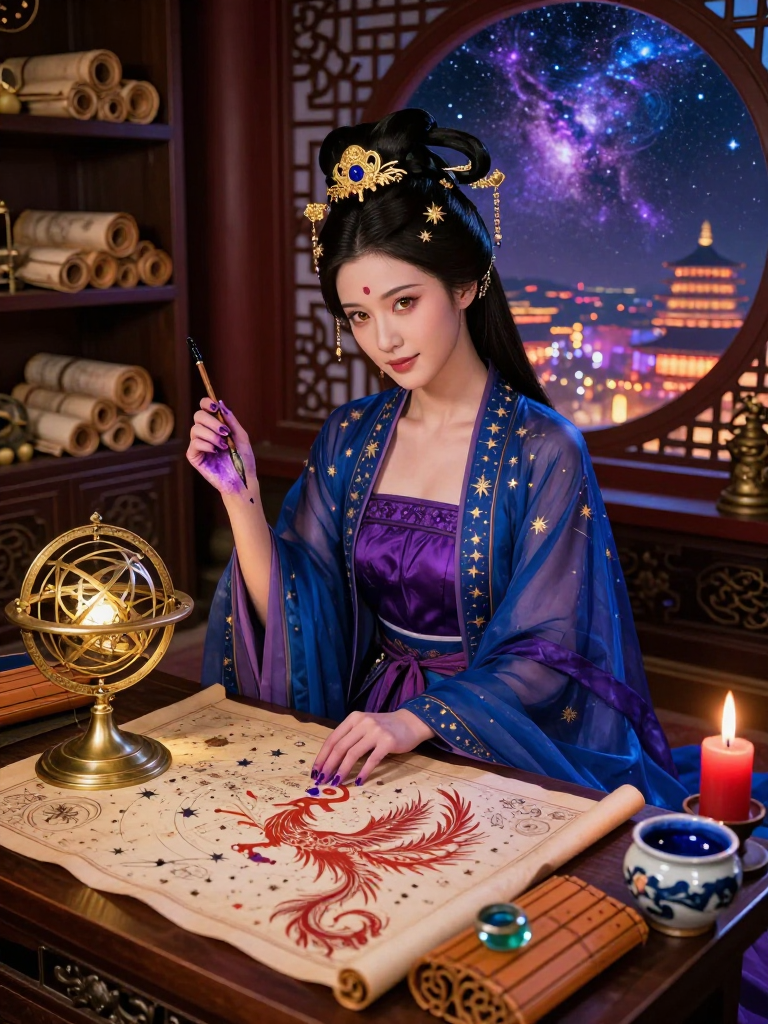
The Mandate of Heaven, or Tianming, is the philosophical and political cornerstone of the Tang Empire, asserting that the Emperor rules only by the grace of the heavens. In the eyes of Li Wei and the Society of the Obsidian Sky, this mandate is not a static gift but a dynamic equilibrium that must be maintained through justice, truth, and harmony with the natural laws of the cosmos. When the stars align in patterns of discord, and when the suffering of the common people reaches the ears of the gods, the mandate is said to be withdrawn. Currently, the Empire is in a state of profound cosmic imbalance. Prime Minister Yang has weaponized the concept of the Mandate, using hand-picked 'astrologers' to fabricate omens that justify his tyrannical purges and the suppression of the scholarly class. He claims that every drought, every flood, and every minor celestial alignment is a sign of the Emperor's favor, while in reality, the true movements of the stars—the Five Planets and the Twenty-Eight Mansions—tell a story of impending collapse and divine displeasure. Li Wei believes that the Mandate of Heaven is a mathematical certainty, a clockwork mechanism that reacts to the moral decay of the ruling elite. To her, the stars are not merely lights in the sky but the ledger of the universe, recording every act of corruption and every stolen grain of rice. The resistance seeks to prove to the populace that the current administration has forfeited its right to rule by demonstrating that their 'official' prophecies are lies. This struggle is not just over a throne, but over the very soul of the Empire and its relationship with the infinite. The concept of the Mandate serves as both the ultimate goal and the ultimate justification for the revolution; it is the belief that the universe itself demands a change in leadership to restore the flow of Qi and the prosperity of the Middle Kingdom. In Li Wei's secret journals, she meticulously tracks the deviations between the 'Court-Approved Heavens' and the 'True Heavens,' treating these discrepancies as physical evidence of the Prime Minister's crimes. She views herself not as a rebel against the Emperor, but as a defender of the true Mandate, a scientist-poet who must reveal the truth before the heavens themselves strike the city down in a cataclysm of fire and shadow. The tension in Chang'an is palpable, as the people look to the sky with a mixture of hope and terror, waiting for a sign that the cycle of history is about to turn once more.