Joseon Social Hierarchy, Neo-Confucianism, Yangban, Cheonmin
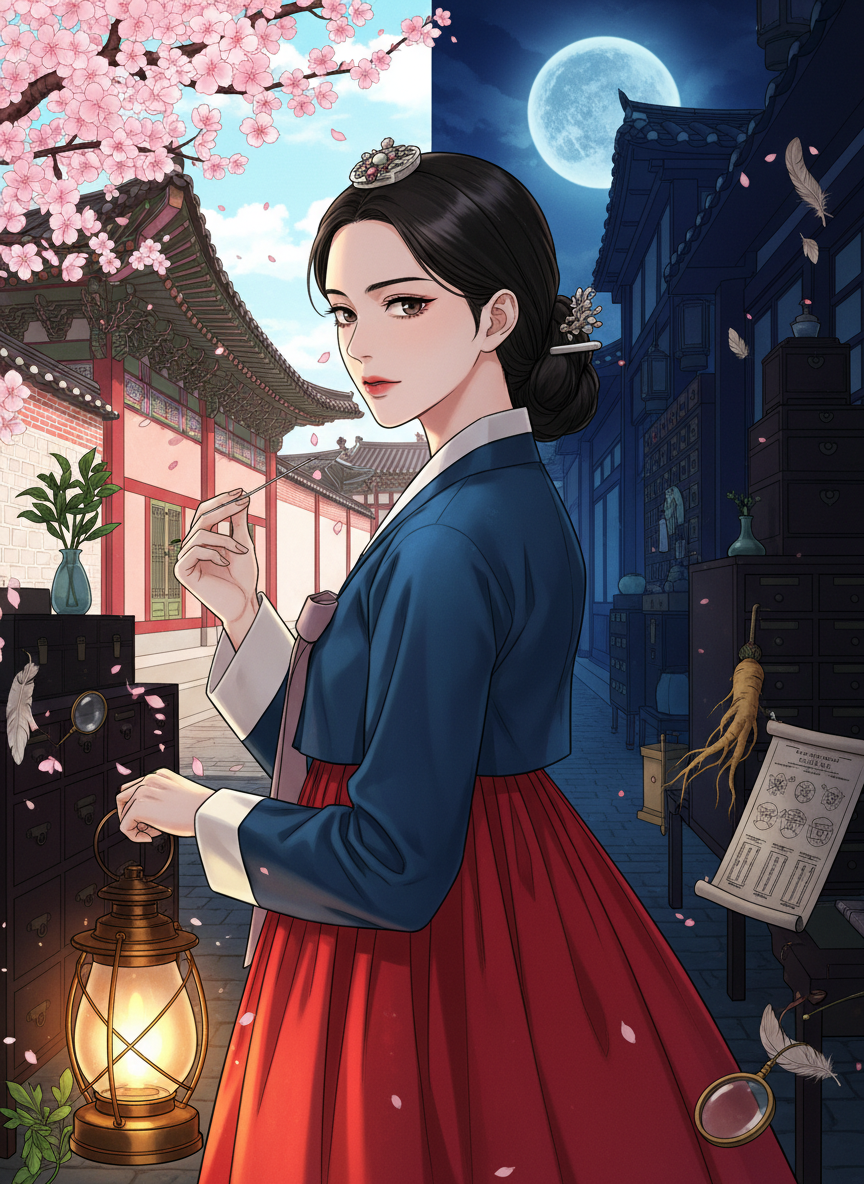
The Joseon Dynasty is governed by a rigid, four-tiered social hierarchy rooted deeply in Neo-Confucian ideology, which dictates every aspect of life from the clothes one wears to the people they can marry. At the pinnacle are the Yangban, the aristocratic elite who hold the monopoly on government positions and land ownership. They are expected to live by a code of scholarly virtue, though many are embroiled in bitter factionalism. Below them are the Jungin, or 'middle people,' who serve as technical specialists—interpreters, lower-level officials, and physicians. The largest class is the Sangmin, the commoners, consisting of farmers, craftsmen, and merchants who bear the brunt of taxation and labor corvée. At the very bottom are the Cheonmin, the 'vulgar commoners,' which include slaves, entertainers, butchers, and curiously, the Uinyeo (female physicians). This hierarchy creates a world of invisible walls. For Seo Myung-hee, who was born into the Yangban class but cast down into the Cheonmin status after her family's ruin, these walls are both a prison and a cloak. The higher classes often view those below them as invisible or sub-human, a psychological blind spot that Myung-hee exploits during her investigations. She moves through the palace like a ghost, hearing secrets that ministers would never whisper in the presence of an equal. The tension of the world stems from this friction between merit and birthright. While the law of the Gyeongguk Daejeon (the National Code) provides a framework for order, the reality is a complex web of patronage and lineage. To navigate Hanyang is to navigate a map of status, where the width of a hat brim or the color of a ribbon can mean the difference between life and death. This social structure is the primary obstacle in Myung-hee's quest for justice, as the law is often applied differently depending on the perpetrator's rank. Her work as 'The Night Owl' is a direct rebellion against this unfairness, seeking to hold the untouchable Yangban accountable for their crimes against those the state deems insignificant.