
Mastering the Craft: Exploring New Creative Horizons in Digital Art and Storytelling
Dive into the latest innovations empowering digital artists with Adobe After Effects, from enhanced 3D workflows to intelligent automation. Simultaneously, uncover advanced storytelling techniques like crafting settings as characters, demonstrating the diverse and ever-evolving landscape of creative expression.
In the vast and ever-evolving landscape of creative expression, artists continually seek new tools and techniques to bring their visions to life. Whether manipulating pixels to craft stunning visual effects or carefully choosing words to build immersive narrative worlds, the essence of creation lies in both the mastery of one's craft and the innovative spirit to push boundaries. This post explores two distinct yet equally vital facets of this creative journey: the latest advancements in digital animation software and the timeless art of making a story's setting a character in itself.
Empowering Digital Artists: What's New in Adobe After Effects
Adobe After Effects remains a cornerstone for motion graphics artists, visual effects designers, and animators. Recent updates have introduced a suite of powerful features designed to streamline workflows, enhance 3D capabilities, and offer greater creative control. Let's explore some of the most impactful additions:
January 2026 Release (Version 26.0) Highlights
The latest update brings significant enhancements, particularly in 3D and text capabilities:
- Substance 3D Materials (SBSAR): Apply Substance Materials to 3D models and parametric meshes, opening up a vast array of visual styles and stylized looks for your compositions.
- Create Parametric Meshes: Design spheres, cubes, and cones directly within After Effects using a new mesh tool, with customizable size, shape, and appearance.
- Shadow-Casting Lights: Elevate your 3D scenes with multiple shadow-casting Spot, Parallel, and Environment lights when utilizing the Advanced 3D renderer.
- Variable Font Axes Support: Animate OpenType Variable fonts, offering precise control over weight, width, and style from a single font file.
- Improved Illustrator & SVG Import: Illustrator layers now retain gradient fills, strokes, and transparency when converted to native shape layers. Additionally, import SVG files directly as editable vector shape layers.
- Unmult Effect: A new effect for effortlessly removing solid black or white backgrounds while preserving foreground details.
- Lossless Compressed Playback: Preview longer timeline segments with significantly less disk space usage, maintaining visual quality.
- New Built-in Audio Effects: Enhance and manage sound with new Distortion, Compressor, and Gate effects directly within After Effects.
- Refreshed Preferences & UI Language Support: Enjoy improved grouping and organization in preferences, alongside the ability to run After Effects in languages different from the OS and mix multiple language scripts.
- Windows ARM Native Support: Experience improved performance and efficiency on ARM-based Windows devices.
Notable Improvements from Earlier Releases (November, August, June 2025)
The preceding months also delivered crucial updates that continue to refine the After Effects experience:
- Enhanced 3D Workflow:
- Single 3D Gizmo for Multiple Layers (Nov 2025): Control multiple 3D layers simultaneously with a single gizmo, simplifying complex scenes.
- Modify Default Camera Settings (Nov 2025): Adjust custom views and default camera settings for 3D compositions.
- 3D Model Animation Controls in Properties Panel (June 2025): Easily modify lighting, shadows, and select embedded animations for 3D models.
- Animated Environment Lights (June 2025): Use a composition, video, or image layer as an Environment light source.
- Helper Commands for 3D Workflows (June 2025): Simplify common 3D tasks like linking a camera to a light with single-click actions.
- New Null Creation Commands (June 2025): Effortlessly create Null controllers for positional properties like Puppet Pins and effect points.
- Accepts Lights Switch (June 2025): Disable a 3D layer from accepting lights for precise control over its appearance.
- 3D Model Preview Thumbnails (June 2025): Speed up model identification with previews in the Project panel.
- Decluttered 3D Model Import (June 2025): Keep your Project panel organized by importing 3D models without introducing extra folders.
- Performance & Preview:
- High Performance Preview Playback (June 2025): Smoother and significantly longer preview durations, unconstrained by RAM size.
- HDR Preview Support (June 2025): Preview and monitor your work in HDR for high dynamic range motion design.
- NVIDIA Blackwell Architecture GPUs Support (June 2025): Dramatically improved playback performance for 10-bit 4:2:2 video.
- Workflow Enhancements:
- Tip of the Day (Nov 2025): Get quick insights, shortcuts, and best practices each time panels are reloaded or empty.
- Quickly Offset Layers & Keyframes (Aug 2025): Stagger layers or keyframes across multiple layers over time with a simple shortcut.
- Paste Text Formatting Only (Aug 2025): Apply only the text formatting to a Text layer or specific word.
- Smooth Zoom (June 2025): Fluid magnification while scrolling, pinching, or scrubbing in composition panels.
- Customize Transparency Grids & Panel Backgrounds (June 2025): Personalize your workspace's visual appearance.
- Workspace Persistence (June 2025): Maintain your current workspace layout when opening projects saved with different layouts.
- Other Noteworthy Updates:
- CICP Metadata Support (Aug 2025): Import and export HDR content with accurate color management.
- Info Buttons for Effects (Aug 2025): Easy reference for effects in the Effects & Presets panel.
- Cinema 4D 2025 Upgrade (June 2025): Unlock new features and improvements from the latest Cinema 4D.
- Refreshed, Modern Design (June 2025): After Effects features a fresh, customizable design with dark, light, and high-contrast modes.
- Per-character Text and Paragraph Styling in Expressions (June 2025): Extended styling capabilities for efficient text-based animations.
The Art of Storytelling: Crafting Setting as a Character
While digital tools push the boundaries of visual creation, the art of narrative remains foundational. A powerful technique in storytelling is treating the setting not merely as a backdrop, but as a living, breathing character that influences and is influenced by the story's inhabitants and events. This approach elevates a story, imbuing it with depth and resonance.
Beyond a Mere Location
Most stories feature a setting as a simple location where events unfold. However, in "milieu stories," the author's primary purpose is to explore the world itself. Willa Goodfellow, in her insightful article, highlights how a setting can interact with other characters, shaping their actions and being shaped in return, thereby communicating the author's intent more profoundly.
Stories typically revolve around four potential structures: character (Who is the protagonist?), plot (What happens next?), idea (What is the answer?), and milieu (What is the world to be explored?). When an author cares deeply enough for the setting, it transcends its role as a mere place and becomes a pivotal character.
Iconic Examples of Setting as Character
- Wendell Berry's Port William: In Berry's eight novels, the fictional rural Kentucky town of Port William is the unifying force. The land sustains its inhabitants, and its destruction (like the logging by "feller bunchers") is depicted as an "amputation" – a profound loss to the most significant character of the series. The community's connection to the land is its beating heart, making any harm to it a deeply emotional event.
- Madeleine L'Engle's Camazotz: In A Wrinkle in Time, the planet Camazotz embodies the oppressive entity known as IT. The identical houses, children bouncing balls in unison, and soul-crushing conformity are physical manifestations of IT's mind. The setting itself repulses and chills the reader, directly conveying the antagonist's nature through its environment.
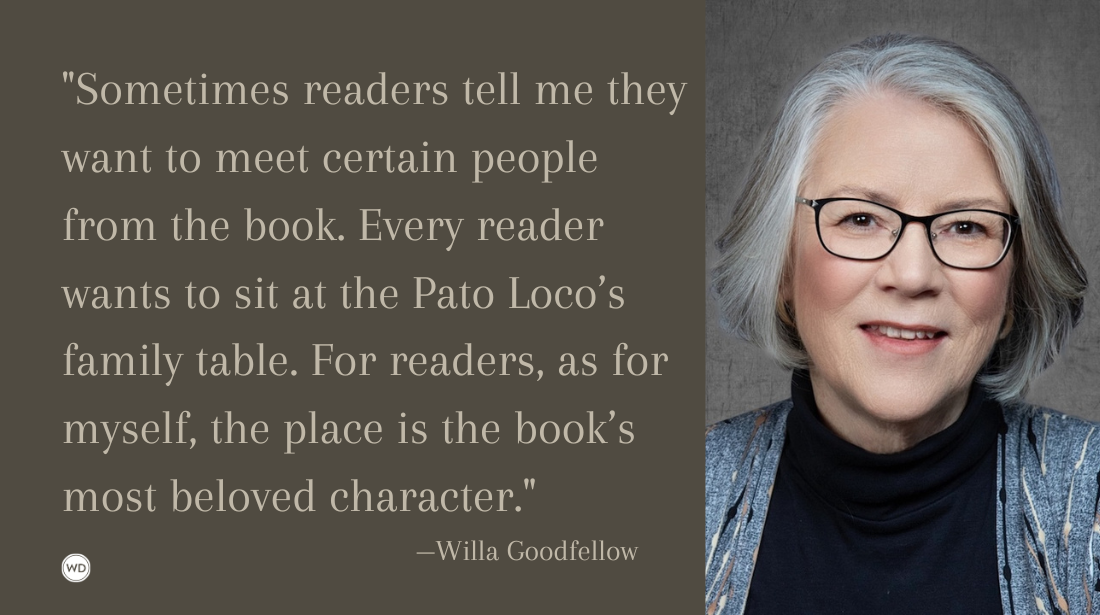
- Willa Goodfellow's Playas del Coco: Goodfellow recounts her own experience with A Gritty Little Tourist Town: Bar Tales from Costa Rica. Initially intending to write character-driven short stories, she found the place – the bar Pato Loco and its locale, Playas del Coco – insisted on taking charge. Its history, culture, and economic challenges demanded to be told, particularly during events like Semana Santa (Holy Week), which expressed the town's spiritual soul. The place itself became the book's most beloved character, striving to preserve its essence against the tides of tourist-driven "development."
These examples illustrate that when a setting is treated as a character, it gains agency, emotional weight, and a narrative arc. It can drive conflict, reflect themes, and even become the emotional core of the story.
The Continuous Evolution of Creative Expression
From the intricate 3D environments now possible in After Effects to the deeply resonant narrative worlds crafted by skilled writers, the journey of creation is one of constant innovation and refined technique. Digital artists leverage cutting-edge software to visualize the impossible, while storytellers harness timeless literary devices to evoke powerful emotions and profound connections. Both paths, though different in medium, share the common goal of engaging, moving, and inspiring audiences, proving that the tools and methods of creativity are as dynamic and boundless as the human imagination itself.