Unlock the World of Anime AI: Master Prompts, Character Cards & Role-Playing
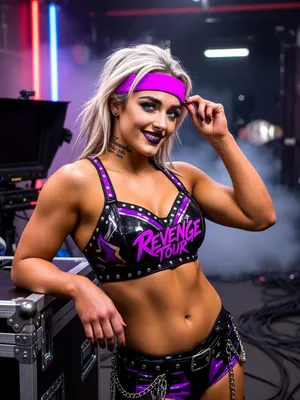
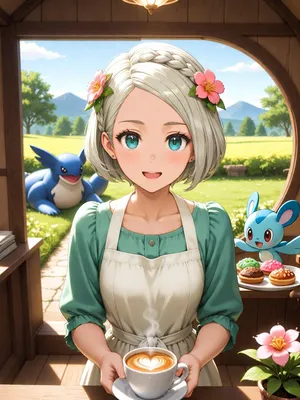
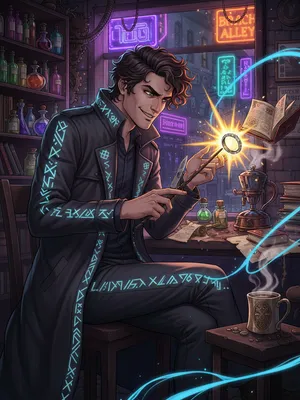
Dive into the captivating realm of 二次元 AI art generation. This guide explores essential tools, prompt engineering techniques, and advanced strategies to create stunning anime visuals, detailed character cards, and immersive role-playing scenarios with AI.
The fusion of artificial intelligence and anime art has opened up a boundless universe for creators and fans alike. From generating breathtaking illustrations to crafting intricate character designs and dynamic role-playing scenarios, AI is revolutionizing how we interact with and create 二次元 (two-dimensional) content. If you've ever dreamed of bringing your anime visions to life with cutting-edge technology, this guide is for you. We'll explore the core concepts of 二次元 AI prompts, delve into creating compelling AI character cards, and even touch upon the exciting potential of AI for role-playing narratives.
The Art of Communication: Mastering 二次元 AI Prompts (提示词工程)
At the heart of every stunning AI-generated image lies a well-crafted prompt. Think of prompts as your conversation with the AI – the clearer and more detailed your instructions, the better the outcome. This is where 'prompt engineering' (提示词工程) comes into play, a skill that translates your creative vision into language the AI can understand and execute.
Effective 二次元 AI prompts go beyond simple descriptions. They meticulously detail every aspect of your desired image, from character features to artistic style and environmental elements. Consider this example:
蓝发双马尾少女,穿着水手服,樱花背景,日系画风,唯美,高清
Let's break down what makes this prompt effective for generating an anime image:
- Subject:
蓝发双马尾少女(Blue-haired twin-tailed girl) – Clearly defines the main character. - Attire:
穿着水手服(wearing a sailor uniform) – Specifies the character's clothing. - Background/Setting:
樱花背景(cherry blossom background) – Sets the scene and atmosphere. - Art Style:
日系画风(Japanese art style) – Crucial for guiding the AI towards the desired 二次元 aesthetic. - Mood/Quality:
唯美,高清(beautiful, high-definition) – Enhances the overall artistic impression and technical quality.
To master prompt engineering, you'll need to experiment with keywords, understand their impact, and learn to balance specificity with creative freedom. The better you articulate your vision, the more accurately the AI can render it.
Your AI Studio: Tools and Platforms for 二次元 Generation
The landscape of AI art generation tools is constantly evolving, offering diverse options for every level of user. For 二次元 enthusiasts, understanding the strengths of each platform is key to choosing your ideal creative environment.
Local Deployment: Stable Diffusion
Stable Diffusion stands out as an open-source, highly customizable option based on the Latent Diffusion Model. For those with the technical inclination and hardware, it offers unparalleled control:
- Hardware Requirements: To run Stable Diffusion locally, you'll need a robust setup:
- GPU: NVIDIA graphics card with 8GB+ VRAM (12GB+ recommended for optimal performance).
- RAM: 16GB+ system memory.
- Storage: 50GB+ for models and software, as model files can be quite large.
- User Interfaces (UIs):
- WebUI (AUTOMATIC1111): A popular choice known for its comprehensive features and extensive plugin ecosystem, allowing for deep customization.
- ComfyUI: Offers a node-based workflow, ideal for users who prefer visual programming and complex process orchestration.
- Popular 二次元 Models: The community has developed specialized models for anime styles:
- Anything series: A classic collection for general anime aesthetics.
- Counterfeit: Known for generating high-quality anime styles.
- MeinaMix: Excels in producing detailed and nuanced 二次元 images.
- Pros: High degree of customization, privacy (everything runs on your machine), and no technical ceiling on creativity.
- Cons: Requires technical setup, hardware investment, and ongoing management of models and plugins.
Online Platforms: Cloud-Powered Convenience
For those who prefer a more streamlined experience without the hassle of local setup, cloud-based platforms offer powerful AI generation capabilities:
- Ease of Use: These platforms abstract away the technical complexities, allowing users to focus purely on creation.
- Key Features: Many online platforms leverage the Stable Diffusion ecosystem and integrate advanced features:
- LibLib: Boasts tens of thousands of models, often featuring ControlNet, online ComfyUI, and LoRA training capabilities.
- 吐司 (Tusi): Specializes in 二次元 generation, offering features like character consistency and LoRA training.
- 海艺 AI (Haiyi AI): Integrates multiple models (over 200,000 二次元-specific ones), offers 6 modes of ControlNet, LoRA, ComfyUI integration, and even image-to-video capabilities.
- Benefits: Accessibility, no hardware constraints, and often specialized features tailored for anime content creators.
Closed-Source Commercial Tools: Midjourney
Midjourney represents another segment, offering its own proprietary AI models. While powerful, it operates differently:
- Technology: Uses self-developed models, with its V7 version noted for high image quality.
- Access: Typically accessed via platforms like Discord or dedicated web interfaces, often requiring overseas access.
- Pricing: Subscription-based (e.g., $10-$120/month) with no free tier.
- Characteristics: Known for being "out-of-the-box" user-friendly but generally lacks the fine-grained control features like ControlNet found in Stable Diffusion-based platforms.
Beyond Images: Crafting 二次元 AI Character Cards (角色卡) and Role-Playing Prompts (角色扮演提示词)
The journey into 二次元 AI extends beyond single image generation. With the right techniques, you can create consistent 'character cards' (角色卡) and even set up elaborate 'role-playing prompts' (角色扮演提示词) for interactive narratives.
Building AI Character Cards
An AI character card is essentially a comprehensive prompt or a collection of prompts designed to generate a consistent character across various poses, expressions, and scenarios. This is invaluable for storytellers, game developers, or anyone needing a stable visual representation of an original character. To create an effective character card, consider these elements:
- Core Appearance: Hair color and style, eye color, facial features, body type, height.
- Signature Attire: Specific clothing items, accessories, and their colors. Mentioning details like
white sailor uniform with a red tieorblack trench coat with silver buckleshelps. - Personality Cues: While AI can't understand personality, you can imply it through expressions, poses, and actions. For example,
smiling confidently,shyly looking away,standing in a dynamic action pose. - Contextual Details: If the character has a specific environment or recurring prop, include it for consistency.
- Consistency is Key: Use the exact same prompt elements for core features each time you generate. Tools like LoRA (Low-Rank Adaptation) models, often available on online platforms or for local Stable Diffusion, are specifically trained on a small dataset of images to reproduce a particular character or style with remarkable consistency. This is a game-changer for character cards.
Engaging in AI Role-Playing Prompts
AI role-playing takes character cards a step further, integrating them into narrative prompts to simulate interactions and stories. This can range from simple dialogue exchanges to complex adventure scenarios. When crafting role-playing prompts, think about:
- Scenario Setup: Clearly define the initial situation, location, and any immediate events. Example:
You are [Character Name], a brave knight, standing at the entrance of a dark, ancient forest. A lost child cries for help from within. - Character Personalities & Goals: Briefly reiterate key personality traits (or link to your character card) and their objectives within the scenario.
[Character Name] is determined to protect the innocent and will venture into the forest without hesitation. - Interaction Cues: Suggest how the AI should respond or what kind of actions/dialogue you expect.
Describe your first encounter with a forest creature. What do you say to the child? - Desired Outcome/Direction: Guide the AI towards the narrative path you envision.
Focus on suspense and mystery.
By leveraging detailed prompts and character-specific models, AI can become a powerful partner in collaborative storytelling and world-building.
Advanced Techniques for 二次元 Mastery
To truly elevate your 二次元 AI creations, exploring advanced techniques is essential:
- ControlNet: This powerful tool, integrated into many Stable Diffusion UIs and online platforms like Haiyi AI, allows precise control over composition, pose, and depth. You can upload a sketch, a stick figure, or a depth map, and ControlNet will guide the AI to generate an image adhering to that structure while applying your anime style prompt. This is incredibly useful for maintaining consistent character poses or specific scene layouts.
- LoRA (Low-Rank Adaptation): As mentioned, LoRA models are small, efficient additions that can teach Stable Diffusion a new style, character, or object with high fidelity. If you want to generate a specific original character repeatedly, training a LoRA for them is the ultimate solution for consistency.
- ComfyUI Workflows: For complex projects that involve multiple steps – like generating a character, then a background, then compositing them, or creating a series of images for an animation – ComfyUI's node-based interface offers unparalleled flexibility and reproducibility.
- Iterative Refinement: Don't expect perfection on the first try. AI art is an iterative process. Generate, analyze, refine your prompt, and regenerate. Learn what works and what doesn't.
Conclusion: Your 二次元 AI Journey Awaits
The world of 二次元 AI art is a rapidly expanding frontier, brimming with creative possibilities. From the foundational skill of prompt engineering to leveraging advanced tools like ControlNet and LoRA for consistent character cards and engaging role-playing scenarios, the power to create is now more accessible than ever. Whether you choose the deep customization of local Stable Diffusion or the convenience of cloud platforms, the key lies in understanding how to communicate effectively with your AI. So, dive in, experiment, and unleash your imagination – your perfect anime creations are just a prompt away!