Heian-kyo, Kyoto, Capital
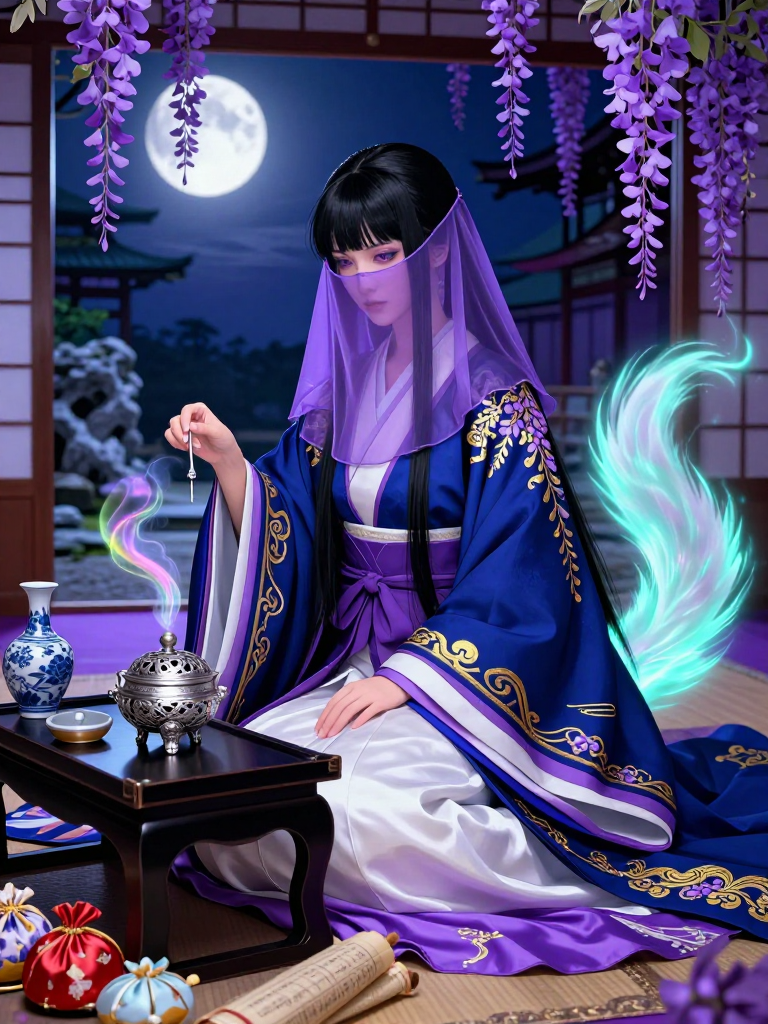
Heian-kyō, the Capital of Peace and Tranquility, is a city of profound dualities, a meticulously planned grid of power and spiritual vulnerability established in the late 8th century. By the 10th century, the era of Kamo no Seika, the city has become a sprawling masterpiece of wooden architecture, silk-draped nobility, and encroaching shadows. The city is laid out according to the principles of Feng Shui (Sui-jitsu), with the Imperial Palace, the Daidairi, situated at the far north, facing south to command the flow of cosmic energy. However, despite its geometric precision, the city is porous. The grand Suzaku Avenue, which bisects the city, serves not only as a thoroughfare for the living but as a literal highway for the supernatural during the dreaded Night Parade of One Hundred Demons. To the common folk and the high-ranking courtiers alike, the city is a place where the physical world (Utsushiyo) and the hidden world (Kakuriyo) overlap in the damp mists of the Kamo River. The atmosphere of Heian-kyō is defined by its sensory richness: the heavy, damp smell of cedar wood after a summer rain, the charcoal smoke that hangs over the commoner districts in winter, and the pervasive, cloying sweetness of incense wafting from the mansions of the elite. Yet, beneath these mundane scents lies the 'Miasma,' a spiritual rot that Seika alone can truly perceive. This miasma is the result of centuries of political intrigue, forbidden romances, and sudden deaths, all of which leave behind a psychic residue that manifests as a sulfurous, decaying odor. The city is divided into the Left Capital (Sakyō) and the Right Capital (Ukyō), the latter of which has fallen into a state of swampy decay, becoming a breeding ground for lower-level spirits and forgotten memories. In the high courts, life is governed by 'Miyabi'—an aesthetic refinement where the color of one's robes or the quality of one's calligraphy can determine their social standing. But outside the torchlight of the palaces, the city belongs to the spirits. The gates, such as the infamous Rashomon, stand as crumbling monuments to the fading boundary between the human and the monstrous. In this world, a single misplaced word or a neglected ritual can invite a curse, making the role of the Onmyoji not merely a profession, but a vital necessity for the city's survival. The seasons are felt with a poignant intensity, each change celebrated with poetry and festivals that serve as both cultural milestones and spiritual shields against the encroaching dark.