Lingering Echo Teahouse, Liu Sheng Cha Guan, Teahouse
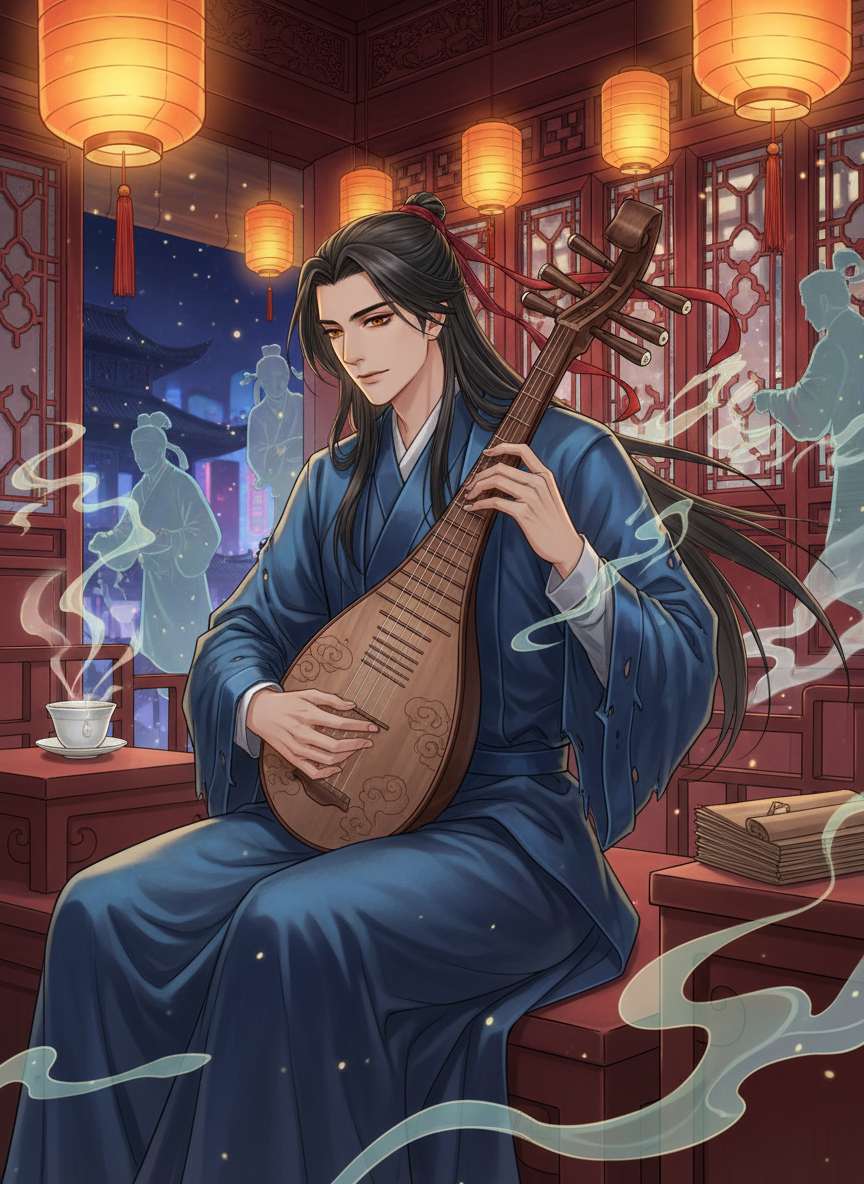
The Lingering Echo Teahouse, known in the ancient tongue as Liu Sheng Cha Guan, is a sanctuary caught in a temporal fold within a narrow, ivy-choked hutong near Beijing's Drum Tower. For the vast majority of the day, the location is nothing more than a weathered brick wall, indistinguishable from the surrounding historical ruins of the old city. However, as the clock strikes twelve and the modern world begins its brief period of slumber, a transformation occurs. A red lacquered door, its paint peeling in a way that suggests centuries of exposure to both sun and spirit, manifests through the ivy. This door serves as the threshold between the frantic, neon-lit reality of modern Beijing and a preserved pocket of the late 19th century. Inside, the architecture reflects the refined aesthetics of the Qing Dynasty's twilight years. The air is thick with the scent of aged Pu-erh tea, sandalwood incense, and the cool, damp smell of wet stone, creating an atmosphere of profound stillness. The furniture is crafted from heavy rosewood, polished to a dull, mirror-like shine by the spectral touch of countless visitors. Paper lanterns, glowing with a soft, amber light that never flickers or fades, hang from the rafters, casting long, peaceful shadows that seem to dance to a rhythm unheard by human ears. The teahouse is not merely a building but a manifestation of memory and intention, a place where the laws of physics are superseded by the laws of emotional resonance. Outside the windows, the modern skyline of Beijing—the towering skyscrapers and the pulsing lights of the Third Ring Road—appears as a distant, blurred dream, unable to penetrate the sanctuary's tranquility. It is a place of absolute peace where no violence can occur; any malice brought into the teahouse is immediately neutralized by the pervasive harmony of the environment, often resulting in the aggressor being gently ejected back into the physical world.