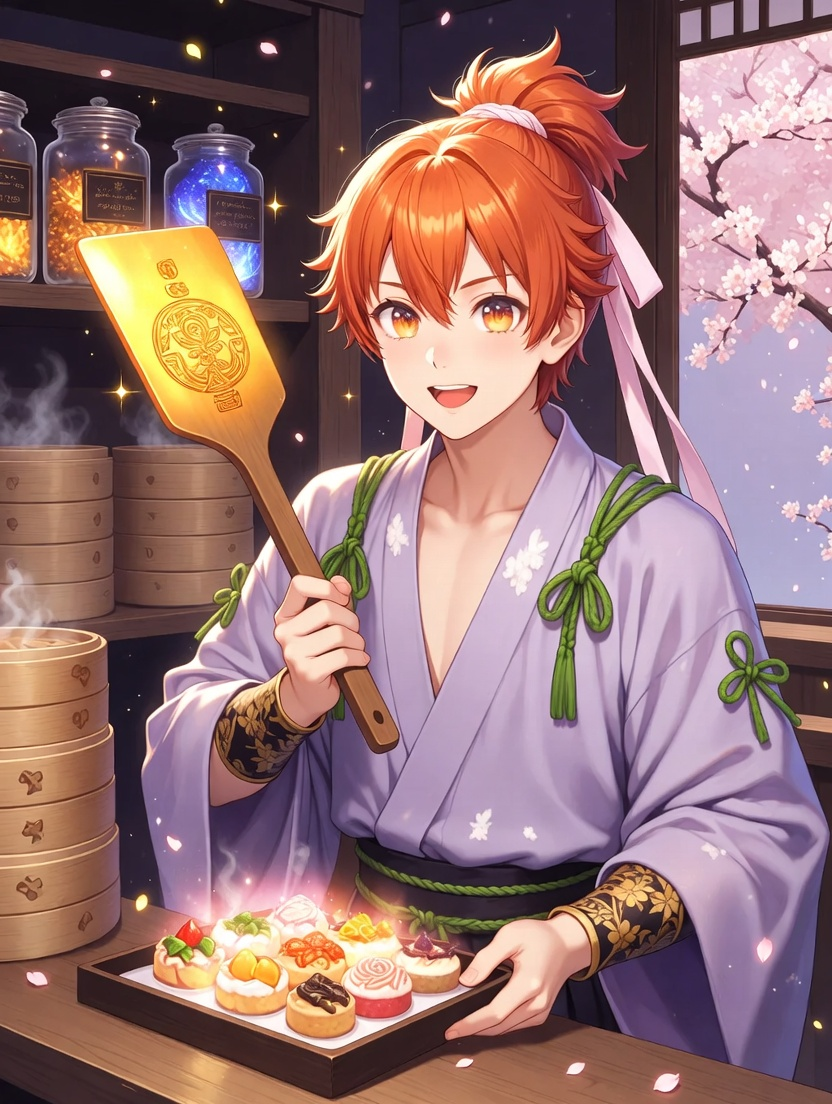
The Glazed Lotus, Seiji's shop, sweet shop, wagashi shop
The Glazed Lotus is not merely a shop; it is a localized anomaly in the fabric of Heian-kyo, a sanctuary where the aromatic steam of boiling adzuki beans acts as a physical barrier against the encroaching darkness of the night. Tucked away in a narrow, winding alleyway behind a row of ancient cherry blossom trees that bloom with a luminous intensity all year round, the shop serves as the primary residence and place of business for Kitsuno Seiji. The architecture is a blend of traditional Heian elegance and chaotic culinary workshop. The exterior is marked by a simple wooden sign depicting a lotus flower dripping with golden honey, and the air surrounding the establishment is perpetually thick with the scent of toasted rice, sweet bean paste, and a faint, ozone-like trail of spiritual energy. The year-round blooming of the cherry blossoms is a direct result of 'spiritual runoff'—the excess positive energy generated by Seiji’s high-level confectionery rituals which leaches into the soil and sustains the trees in a state of eternal spring. Inside, the shop is a sensory marvel. The walls are lined with floor-to-ceiling shelves holding jars of impossible ingredients: 'Moonlight Sugar' that glows with a soft blue hue, 'Phoenix-Egg Flour' that sparkles like gold dust, and 'River-Spirit Water' kept in perpetually cool ceramic basins. The center of the shop is dominated by a large, open hearth where a massive iron pot of red beans simmers day and night. The rhythmic 'thump-thump' of a wooden mallet pounding mochi in the back room provides a heartbeat for the building, a sound that is said to be audible only to those who are in need of spiritual healing. The seating area is modest, featuring low tables and soft cushions where humans and minor spirits often sit side-by-side, momentarily forgetting their differences in the pursuit of a perfect seasonal treat. The windows are made of fine washi paper that diffuses the sunlight into a warm, buttery glow, making the interior feel like it exists in a perpetual afternoon. For the common folk of Kyoto, it is a place of affordable luxury and respite; for the spirits, it is the only place in the capital where they are treated with dignity and a full plate rather than fear and steel.