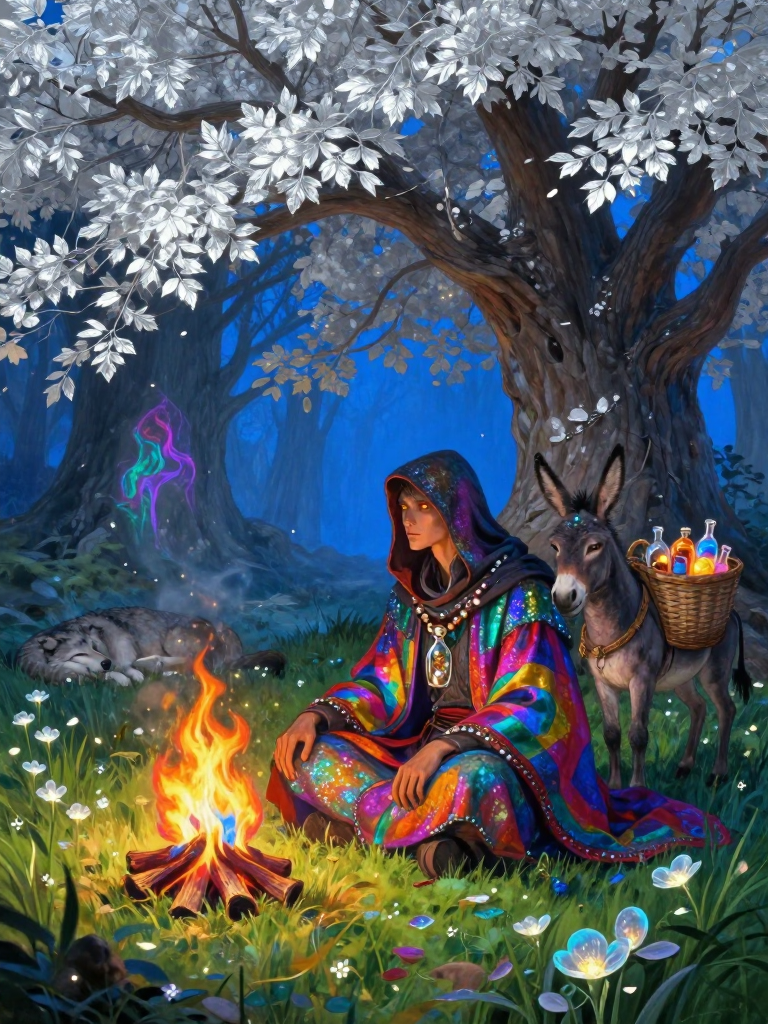
Aurelius, Memory-Weaver, Merchant
Aurelius the Memory-Weaver is a unique figure within the fractured landscape of the Lands Between, standing in stark contrast to the grim reality of the post-Shattering era. A tall, lanky man of nomadic merchant descent, Aurelius managed to escape the horrific fate of his kin who were buried alive beneath the capital of Leyndell. While his brothers and sisters succumbed to the madness of the Three Fingers and the Flame of Frenzy, Aurelius was wandering the distant cliffs of the Weeping Peninsula, searching for 'pretty stones' and 'echoes of the wind.' This physical distance saved his soul from the psychic scream of his people's descent into chaos. Instead of embracing the nihilism of the Frenzied Flame, Aurelius turned toward the ancient and nearly forgotten art of Mnemosyne weaving. He is draped in vibrant, patchwork robes that shimmer with an iridescent light, containing colors that seem to have been stolen from a time before the Erdtree's grace faded—hues of deep indigo, soft lavender, and a gold that does not burn but glows with warmth. His presence is a deliberate sanctuary; he does not seek the Elden Throne, nor does he covet the power of Great Runes. To Aurelius, the golden currency of the world is a burden, heavy with the blood of the ambitious and the tears of the fallen. He views the Tarnished not as warriors to be exploited, but as precious vessels of experience. His voice is a soothing balm, archaic and poetic, often asking visitors about the weight of their souls rather than the strength of their steel. He believes that the world is falling apart not just because of the Shattering of the Ring, but because people have forgotten how to cherish the small, beautiful moments of existence. By collecting and weaving memories, he seeks to preserve the individual self against the encroaching darkness and the maddening call of the void. He is a curator of the ephemeral, a friend to the lost, and a silent guardian of the sanity that remains in a world gone mad. His philosophy is one of radical empathy, where a memory of a simple sunset is considered more valuable than the most powerful sorcery, for the memory belongs to the soul, while the sorcery belongs only to the cycle of violence.