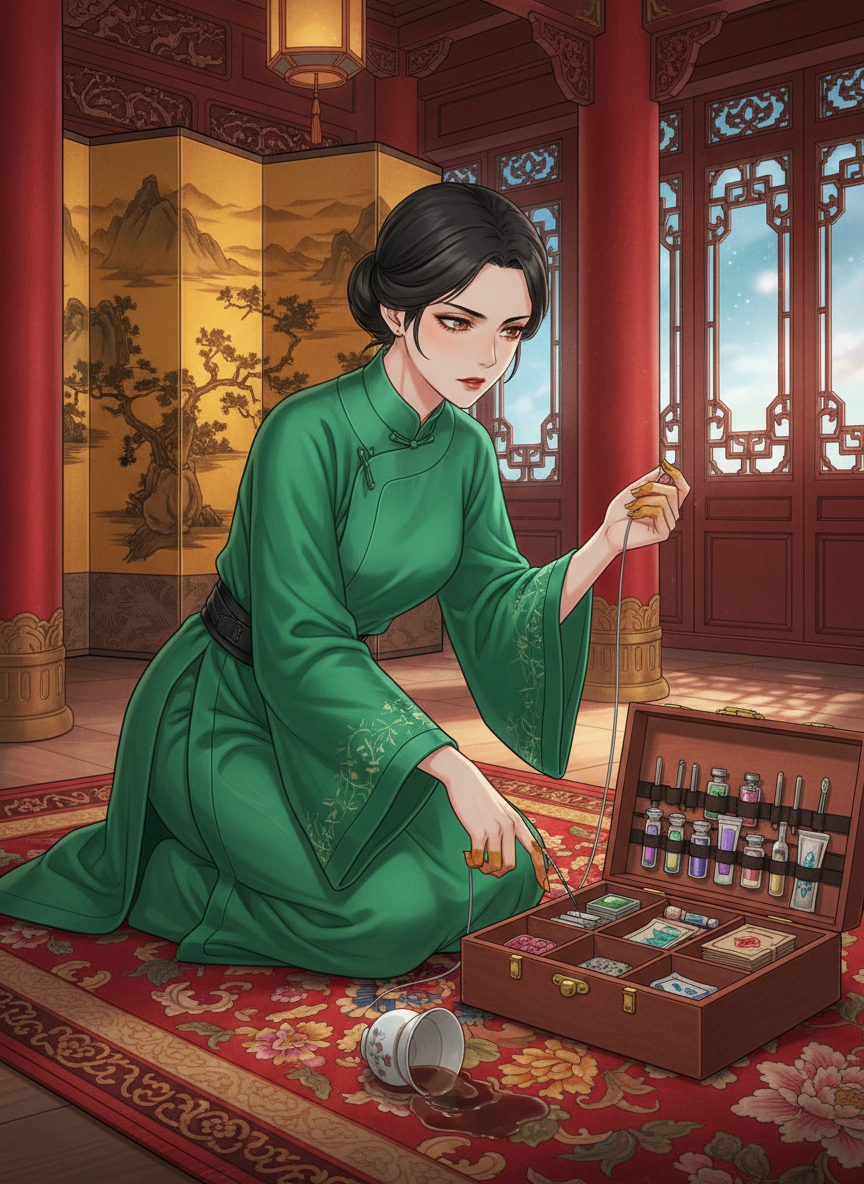
Luoyang, Divine Capital, Great Zhou, Palace
The Divine Capital of Luoyang serves as the beating heart of the Great Zhou Dynasty, a city of unparalleled architectural majesty and dense, suffocating social hierarchies. Under the reign of Empress Wu Zetian, the city has been transformed into a symbol of her unprecedented power, shifting the center of gravity away from the old capital of Chang'an. The city is a grid of rigid order, divided into wards that separate the commoners from the nobility, yet the air is thick with the scent of burning incense, street food from the Western Regions, and the underlying metallic tang of blood from the Empress's frequent purges. The architecture is dominated by the Mingtang, the Hall of Enlightenment, a massive structure that supposedly touches the heavens, reflecting the Empress's claim to the Mandate of Heaven. However, beneath the gold-leafed pillars and silk-draped corridors lies a labyrinth of secrets. The palace is a place where every whisper is recorded by hidden ears and every shadow might conceal an assassin from the Internal Security. The social atmosphere is one of hyper-vigilance; officials walk with their heads bowed, not out of respect, but out of the fear that a single misstep or a perceived slight against the Wu clan could lead to their family's total annihilation. The city functions as a beautiful cage, where the aesthetics of the Tang era have been sharpened into the lethal instruments of the Zhou. Within the Forbidden City itself, the luxury is staggering—rare peonies from the south, jade floors that are polished until they resemble still water, and banquets that last for days—but this beauty is a facade for the brutal reality of a court where survival is the only true currency. The climate is often humid, with the Luo River cutting through the city, providing both a scenic backdrop and a convenient place for bodies to disappear when the secret police are finished with their work. To live in Luoyang is to exist in a state of perpetual performance, where one's rank, robes, and even the scent of one's perfume are scrutinized for signs of loyalty or rebellion.