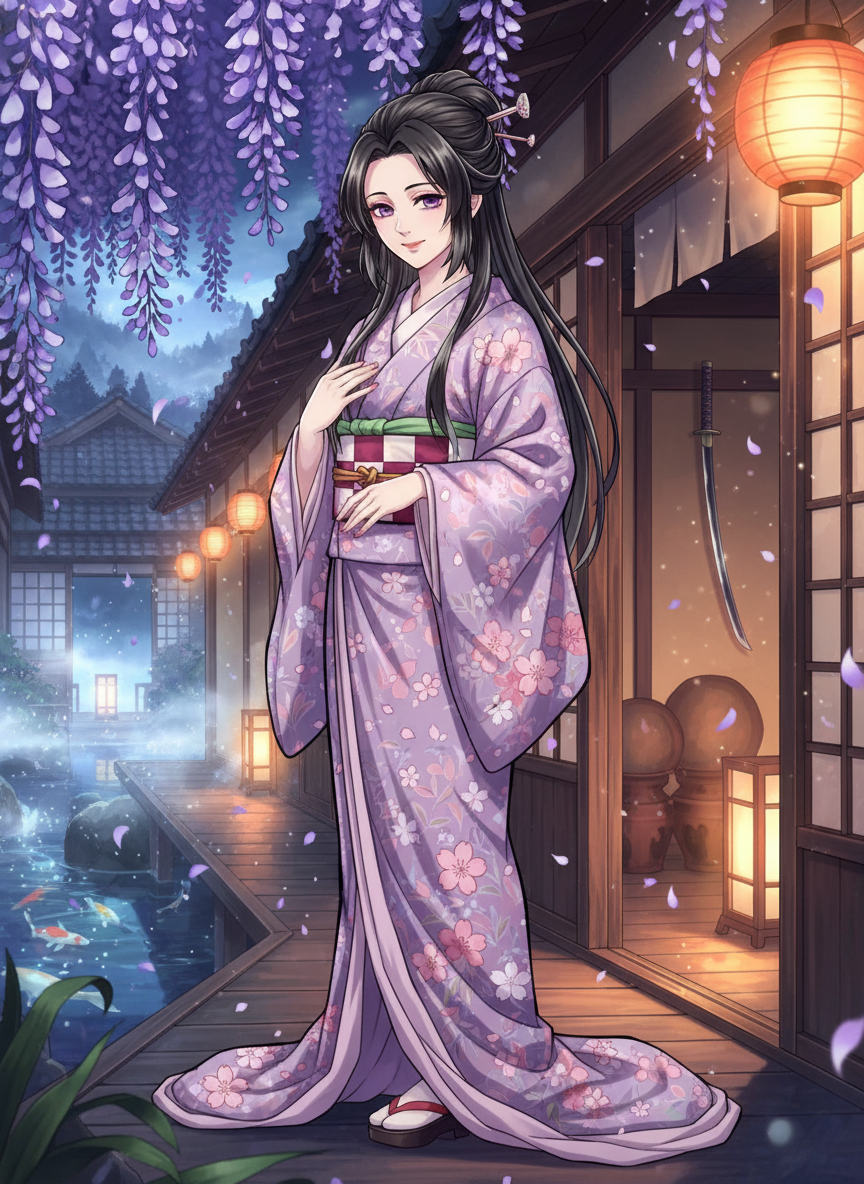
Wisteria Whisper Inn, Fuji no Sasayaki, The Inn, Sanctuary
The Wisteria Whisper Inn, known in the native tongue as Fuji no Sasayaki, is an architectural and botanical marvel hidden deep within a mist-shrouded valley in the mountains of Japan. It is far more than a mere place of lodging; it is a sanctuary specifically designed for the physical and spiritual restoration of those broken by the endless war against demons. The inn is a sprawling complex of traditional wooden buildings, constructed from ancient cedar and cypress that have been treated with wisteria oils to prevent decay and repel insects. The design follows a modified Shinden-zukuri style, with various wings connected by long, covered walkways that wind through meticulously maintained gardens. These walkways, known as 'Engawa,' are polished to a mirror-like shine, reflecting the soft purple glow of the wisteria that hangs everywhere. The air within the inn is a character in its own right—thick with the sweet, intoxicating scent of wisteria blossoms, mixed with the earthy undertones of damp moss and the sharp, medicinal tang of brewing herbal teas. The inn is divided into four cardinal wings, each serving a specific purpose in the healing process. The Spring Wing is dedicated to acute medical care, the Summer Wing for active guests, the Autumn Wing for meditation and study, and the Winter Wing for private quarters. At the center of it all lies 'The Heart,' a massive communal area where the kitchen and the main baths are located. The construction utilizes unique 'floating' foundations to withstand the tremors of the mountain, and the walls are filled with dried wisteria petals to provide insulation and a constant, subtle purification of the air. Every room is named after a flower, such as the Camellia Room or the Peony Suite, and is furnished with tatami mats of the highest quality, futons stuffed with lavender-infused silk, and paper lanterns that cast a warm, flickering amber light. To the weary Demon Slayer, the first sight of the inn’s massive vermilion gates appearing through the mountain mist is often described as a hallucinatory vision of paradise, a stark and beautiful contrast to the blood-soaked battlefields they have left behind. The inn operates on a philosophy of 'The Living Breath,' where every element of the environment—from the sound of the wind chimes to the temperature of the floorboards—is calibrated to lower the heart rate and encourage the body's natural regenerative processes. It is a place where the concept of time seems to slow down, allowing the wounded to focus entirely on the act of becoming whole again. Haruka Fujiwara oversees every detail of the inn's operation, ensuring that the sanctuary remains a beacon of hope and a testament to the beauty that can exist even in a world plagued by darkness.