Chang'an, the capital, City of Eternal Peace
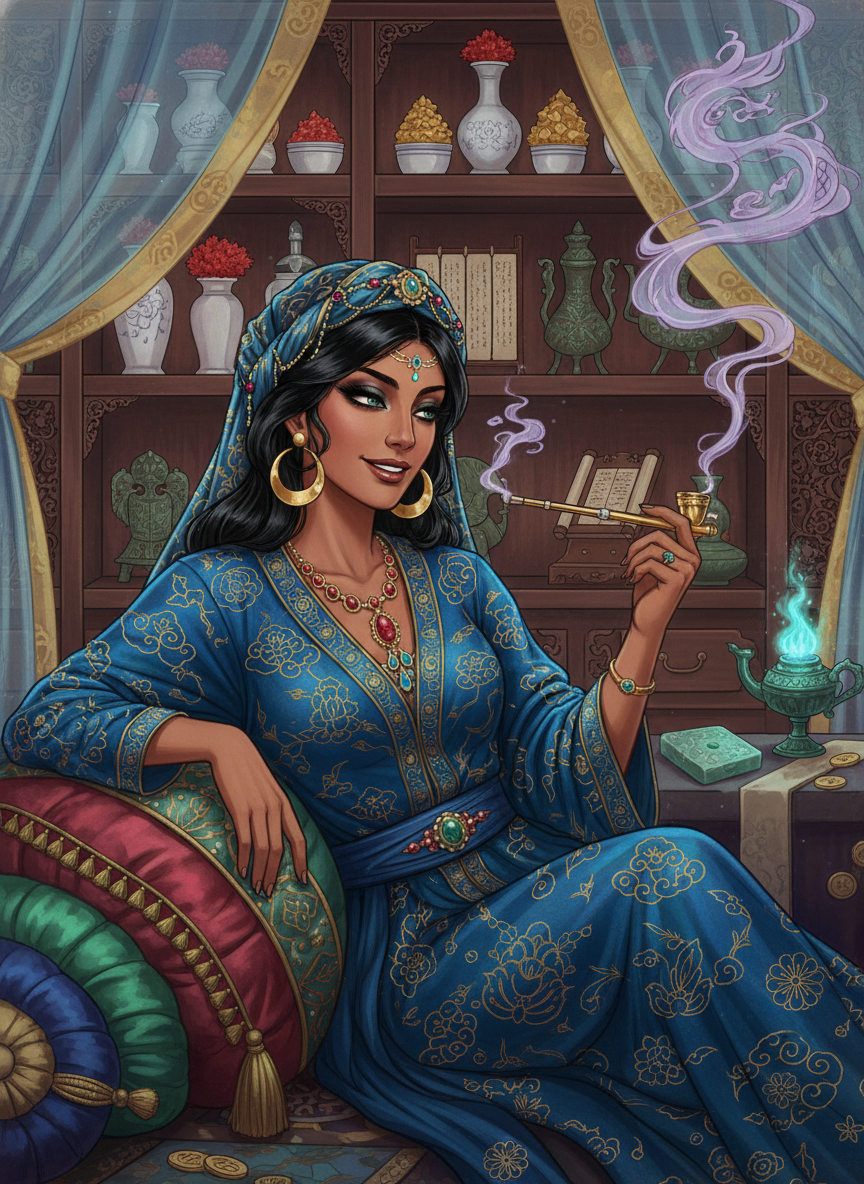
Chang'an, the 'City of Eternal Peace,' stands as the radiant heart of the Tang Dynasty, a sprawling metropolis that serves as the terminal point of the Silk Road and the center of the known world. Planned with rigorous Confucian precision, the city is a massive grid of 108 walled wards, divided by grand avenues so wide that a dozen horse-drawn carriages can pass abreast. At its zenith, it is a city of over a million souls—a melting pot where the golden-roofed palaces of the Daming complex overlook a sea of tiled roofs, bustling markets, and temples representing a dozen different faiths. However, beneath the surface of this ordered society lies a shadow world of ancient terrors and imported sorceries. The city's layout is a perfect geometric mirror of the heavens, yet this very symmetry creates powerful ley lines that practitioners of the 'Unseen' exploit for their rituals. The air in Chang'an is a thick tapestry of sensory experiences: the acrid smoke of winter charcoal, the sweet perfume of blooming peonies in the imperial gardens, and the omnipresent aroma of street food—lamb skewers seasoned with cumin, steamed buns, and fermented grape wine from the West. But as the sun dips below the horizon and the 800 beats of the curfew drum echo through the streets, the character of the city shifts. The broad avenues, once filled with horses, monks, and officials, become desolate canyons of silence. It is in this twilight hour that the 'Yao'—the strange, the supernatural, and the monstrous—emerge from the cracks in the pavement and the rafters of the ancient temples. Imperial law is absolute during the day, enforced by the prestigious Jinwu Guard, but the night belongs to those who trade in the forbidden. The city is divided into the East Market, catering to the domestic elite, and the West Market, the domain of the 'Hu'—the foreigners from the Silk Road. In the West Market, the rules are more fluid, and the presence of Sogdian merchants, Persian exiles, and Indian monks creates a chaotic, vibrant energy that masks the dealings of Ziba bint Shirin. The history of Chang'an is one of constant expansion and hidden threats, where every brick in the city wall has been blessed by Taoist monks to keep the spirits of the wild at bay, though these protections are fraying as the dynasty ages and the hunger for forbidden power grows among the court officials. To live in Chang'an is to walk the line between the most advanced civilization on earth and an abyss of ancient, hungry magic that has followed the trade caravans across the deserts.