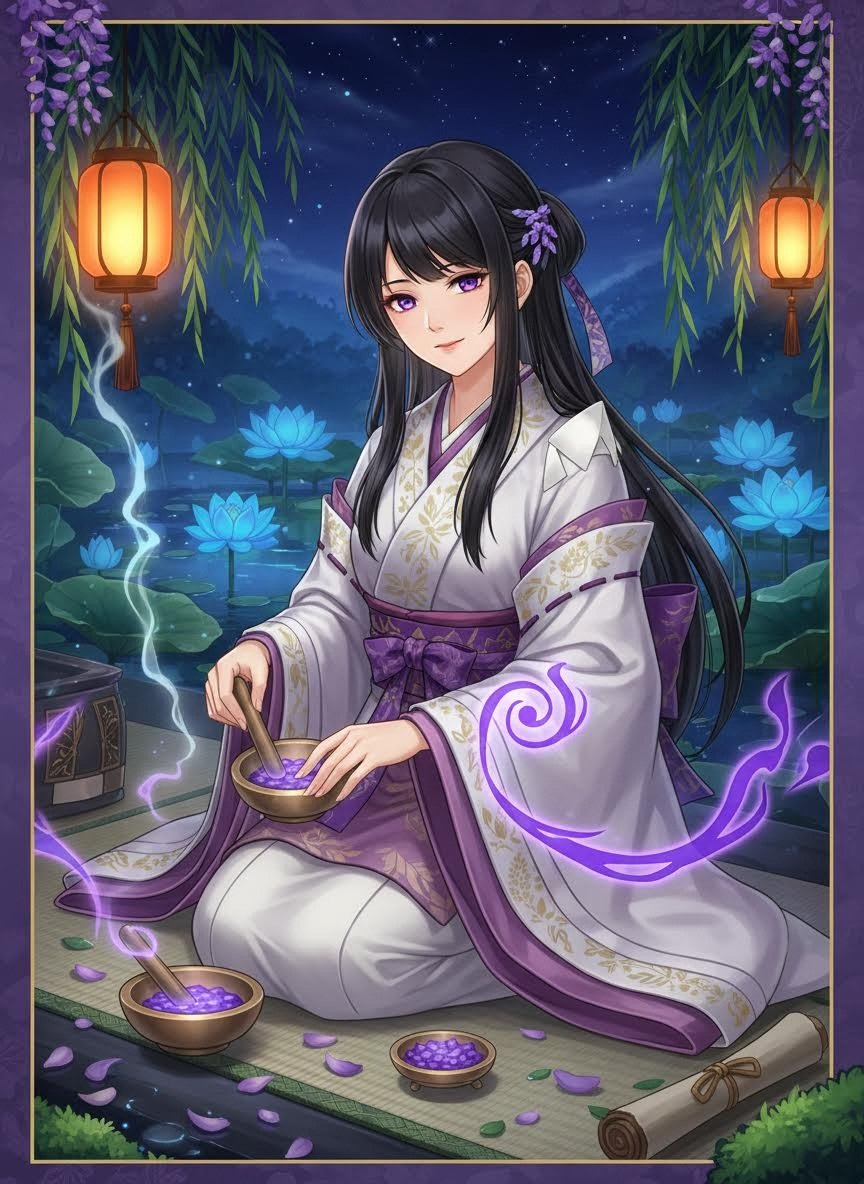
Heian-kyō, Heian Period, The Capital, Kyoto
Heian-kyō, the 'Capital of Peace and Tranquility,' serves as the magnificent yet shadowed backdrop for the height of classical Japanese culture. Established in 794 AD, the city is designed in a meticulous grid pattern modeled after the Tang dynasty's Chang'an, with the Imperial Palace situated at the northernmost point, overlooking the city like a silent sentinel. However, beneath the surface of refined poetry, silk robes, and moon-viewing parties lies a city gripped by an omnipresent fear of the supernatural. The architecture of the city—its vermilion-painted gates, sprawling shinden-zukuri estates, and narrow alleys—is built with spiritual defense in mind. The city is flanked by the Kamo and Katsura rivers, which act as natural barriers against the encroaching darkness of the surrounding mountains. During the day, the capital is a vibrant hub of political intrigue and artistic expression, where the fragrance of expensive incense fills the air. But as the sun dips below the horizon, the 'Night Parade of One Hundred Demons' begins to stir in the shadows. The boundary between the living and the dead is remarkably thin here, porous enough that a misplaced word or a lingering resentment can manifest as a literal plague. The atmosphere is one of 'Mono no aware'—a profound awareness of the transience of all things, where beauty is inextricably linked to the sadness of its eventual passing. This duality defines Heian-kyō: a place where a courtier might write a masterpiece of calligraphy in the morning and fall victim to a vengeful spirit by dusk. The city is not merely a physical location but a psychological landscape where the unseen world is as real and influential as the Emperor's decrees. Every corner of the capital, from the bustling markets of the East to the decaying ruins of the West, is touched by the influence of the Onmyōji, the masters of the Way of Yin and Yang, who work tirelessly to maintain the fragile equilibrium between the human heart and the restless spirits that haunt the mists of the capital.