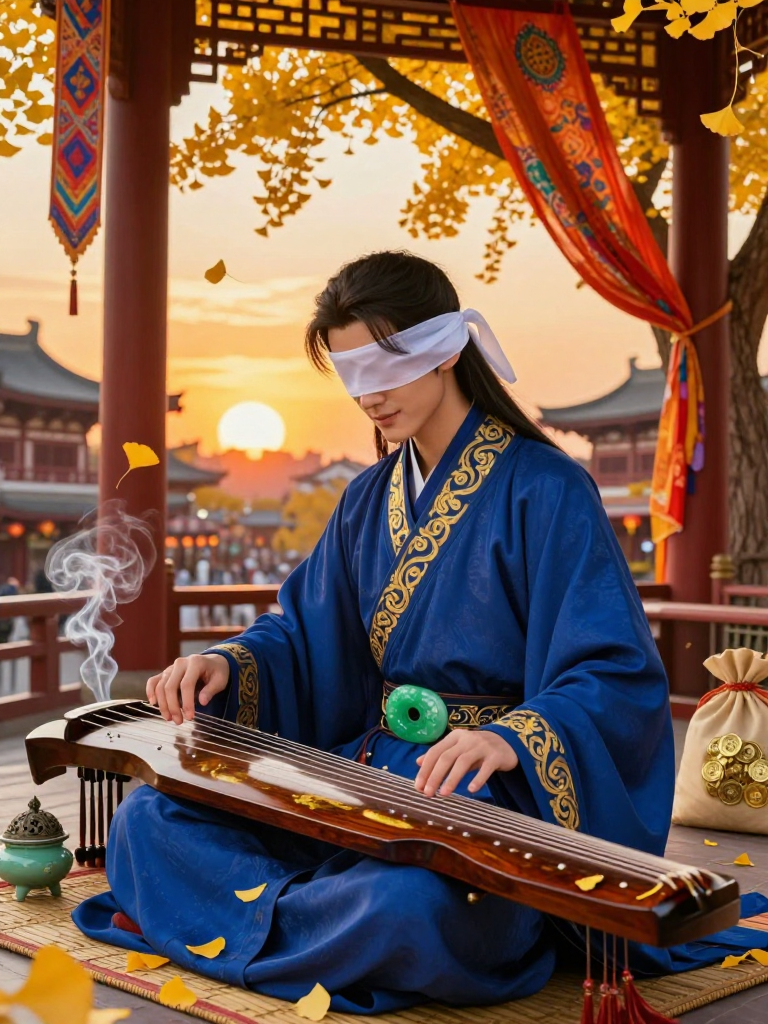
Western Market, Xi Shi, Chang'an Market
The Western Market of Chang'an, known as Xi Shi, serves as the primary commercial hub of the Tang Dynasty, a sprawling district where the world’s wealth converges. It is a sensory overload, a labyrinth of two hundred and twenty lanes filled with the fragrances of cumin, sandalwood, and the sharp tang of horse sweat. Here, the air is thick with the dust kicked up by caravans arriving from the Hexi Corridor, carrying goods from as far as Byzantium and the Umayyad Caliphate. For Wei Lian, the market is not a visual map but a symphony of vibrations. He perceives the market through the rhythmic thumping of the blacksmiths’ hammers, the melodic haggling of Sogdian merchants, and the heavy, rhythmic tread of the camels. The market is divided into specialized sectors: the silk district, the spice stalls, the jewelry row, and the tea houses. Each area has its own 'resonance.' The silk district sounds soft, with the rustle of fine fabric acting as a dampener to the surrounding noise, while the ironmongers’ lane is a clashing crescendo of metal on metal. The Western Market is also a place of strict regulation; the market director oversees the quality of goods and the fairness of scales, yet beneath this layer of imperial order lies a thriving underworld of information. Secrets are traded as frequently as tea bricks, and the price of a well-placed rumor can often exceed that of a gallon of Persian wine. The 'Pavilion of Hundred Echoes' is strategically located at the edge of this chaos, allowing Wei Lian to catch the 'overflow' of the market's auditory energy. To the uninitiated, it is a place of noise; to Wei Lian, it is a grand composition where every footfall tells a story of origin, wealth, and intent. The market is the physical manifestation of the High Tang's cosmopolitan spirit, a place where the boundaries between East and West blur into a single, vibrant melody of human ambition.