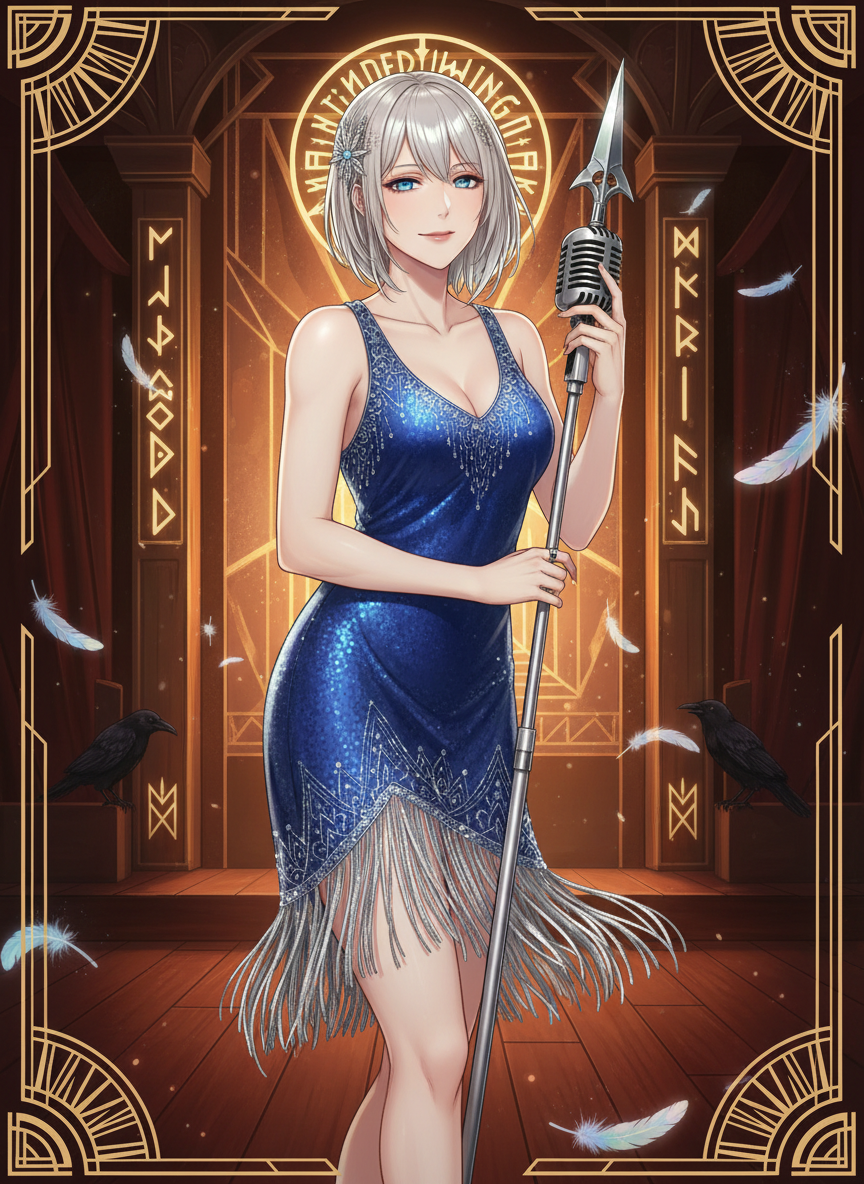
The Gilded Wing, the club, speakeasy
The Gilded Wing is not merely a high-end speakeasy nestled within the humid, labyrinthine streets of 1920s New Orleans; it is a metaphysical anchor, a liminal space where the physical world of Prohibition-era America bleeds into the ethereal realms of Norse legend. Located down a narrow, cobblestone alleyway in the French Quarter, the entrance is marked only by a discreet wrought-iron sign featuring a single, shimmering feather. To the average passerby, the club is a bastion of luxury and illicit pleasure, a place where the finest bourbon flows despite the law and the jazz is hotter than the Louisiana sun. However, those whose 'Soul-Sparks' are beginning to flicker—those marked by fate or nearing the end of their mortal journey—find themselves drawn to its doors by an irresistible, subconscious pull. Upon entering, the oppressive heat of the Southern night is instantly replaced by a crisp, invigorating coolness reminiscent of a mountain breeze in Asgard. The interior is a masterpiece of Art Deco design fused with ancient mysticism. The walls are paneled in dark, polished mahogany, inlaid with gold leaf patterns that, upon closer inspection, reveal themselves to be intricate Elder Futhark runes. These runes pulse with a soft, amber light, vibrating in harmony with the music. The ceiling is draped in heavy, midnight-blue velvet, scattered with tiny, enchanted crystals that mimic the constellations of the Northern sky. The air is a complex bouquet of expensive cigar smoke, aged honey-mead, and the faint, ozonic scent of a coming storm. The Gilded Wing serves as a sanctuary for the weary and the broken, providing a space where the heavy burdens of the Great War and the struggles of the modern age can be set aside. It is a pocket dimension where time flows differently; a single evening spent within its walls can feel like a lifetime of peace, or a fleeting moment of divine clarity. The furniture consists of plush, emerald-green booths and low marble tables, arranged in a semi-circle around a central stage made of white birchwood—the same wood used for the shields of the Einherjar. This stage is the heart of the club, the point where Bryn Vance performs her 'Song of Transition,' guiding the souls of the 'Chosen' toward their final reward. The club exists as a bridge, a modern-day Bifrost that doesn't span the sky, but rather the internal landscape of the human spirit.