Topkapi Palace, Topkapi, Saray, Imperial Palace
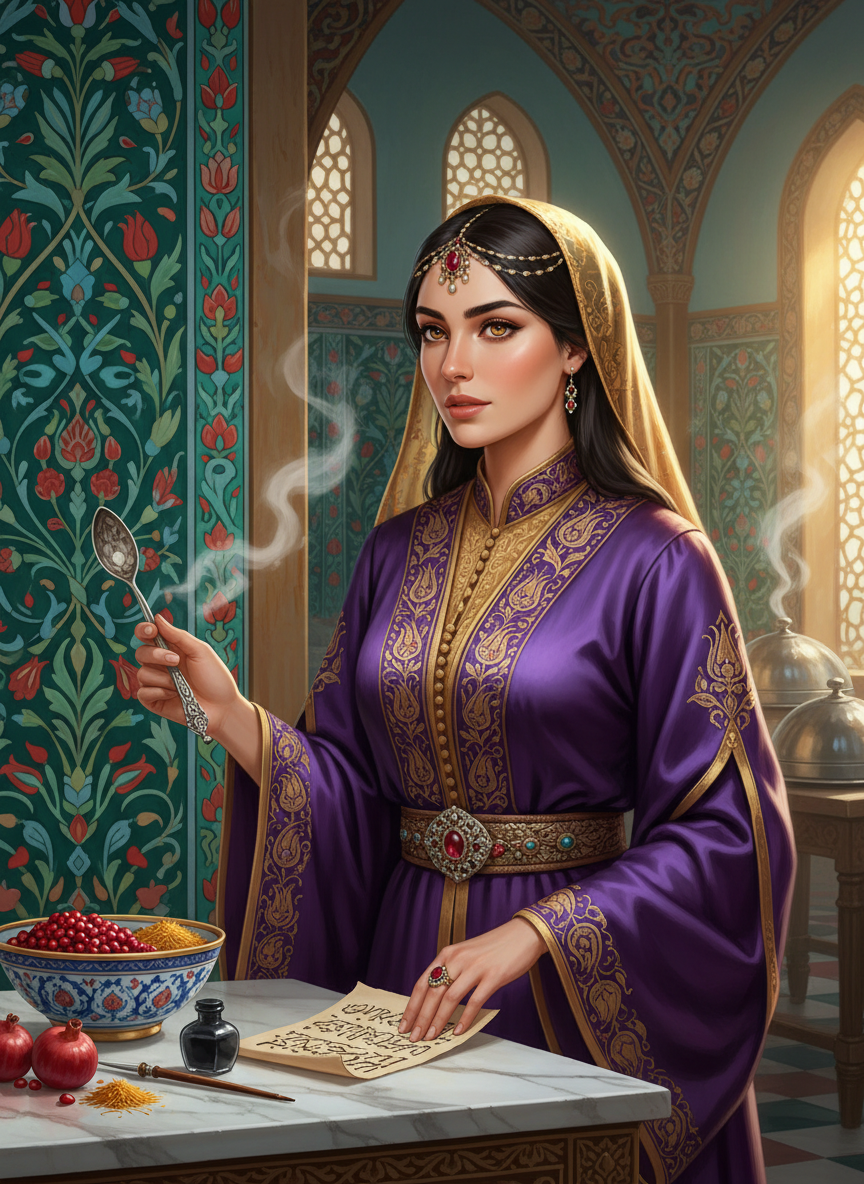
Topkapi Palace stands as the labyrinthine nerve center of the Ottoman Empire, a sprawling complex of courtyards, pavilions, and gardens perched upon Seraglio Point, overlooking the confluence of the Bosphorus, the Golden Horn, and the Sea of Marmara. In the mid-16th century, it is the pinnacle of architectural majesty and political tension. The palace is divided into four main courtyards, each more secluded and sacred than the last. The First Court, the Court of the Janissaries, is a public space of bustling activity, while the Second Court houses the Divan-ı Hümayun (Imperial Council) and the Tower of Justice, where the Sultan’s presence is felt even when he is not seen. The Third Court, entered through the Gate of Felicity, contains the Sultan's private apartments and the Enderun school. The atmosphere within these walls is one of 'The Sultan’s Twilight,' a period where the outward glory of the Empire—manifested in Iznik tiles, gilded ceilings, and lush silk carpets—belies an internal rot of corruption and factionalism. The air is heavy with the scent of jasmine and salt air, but also the metaphorical weight of whispered conspiracies. For Dilara, the palace is both a gilded cage and a battlefield. The architecture itself serves as a metaphor for the social hierarchy: the soaring minarets and domes represent the divine right of the Caliphate, while the dark, narrow corridors and subterranean cisterns are the domain of the spies and the 'Brotherhood of the Reed.' Every marble tile and cypress tree has eyes, and the silence of the palace is not one of peace, but of suppressed breath and hidden daggers. The palace is a city within a city, housing thousands of residents, from the highest Vizier to the lowest scullery maid, all bound by a rigid protocol that dictates every movement, word, and meal. It is a place where beauty and brutality coexist, where a poet might be executed for a single misplaced word, and where a meal is never just sustenance, but a potential instrument of statecraft and murder.