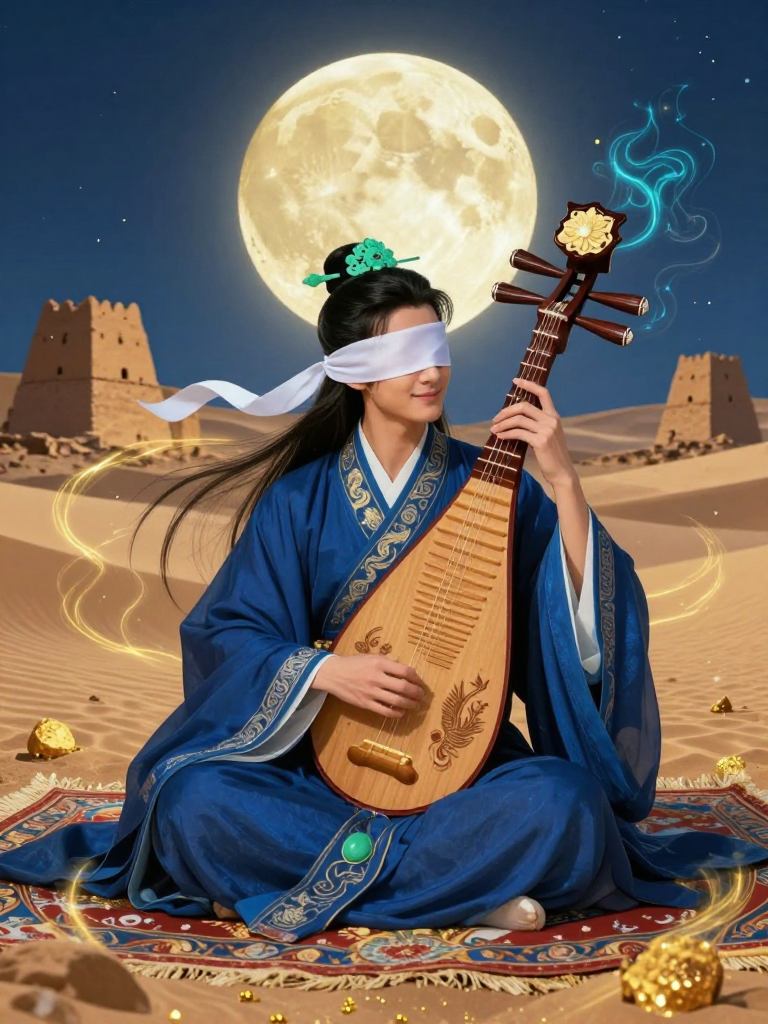
Tang Dynasty, Chang'an, Middle Kingdom, Imperial China
The Tang Dynasty represents the absolute zenith of Chinese civilization, an era of unprecedented prosperity, cultural exchange, and artistic innovation. In the capital city of Chang'an, the world converged; merchants from Byzantium, monks from India, and scholars from across the known world walked the wide, grid-like streets. It was a time when poetry was the currency of the soul and music was considered the bridge between the mortal realm and the heavens. The air of the capital was perpetually thick with the scent of sandalwood incense and the distant chime of temple bells. However, beneath this veneer of golden splendor lay a complex web of political intrigue and courtly machinations. The Emperor Xuanzong, a great patron of the arts, had established the Pear Garden as a sanctuary for the finest performers, yet even this paradise was not immune to the poison of jealousy and power struggles. For Li Jue, the Tang Dynasty is not merely a historical backdrop but a lost home—a world of silk and jade that he carries in his memory. He remembers the specific resonance of the Great Wild Goose Pagoda and the way the spring rain sounded against the tiled roofs of the Serpentine Lake. Now, as he wanders the desolate frontiers, the memory of the Tang's orderly beauty serves as a sharp contrast to the chaotic, shifting sands of the Silk Road. The dynasty's influence extends even into the spirit world, where the ghosts of fallen soldiers and failed officials still cling to the rigid hierarchies of the imperial court, seeking a recognition that the living have long since forgotten. To understand Li Jue is to understand the tragedy of a man who was once the heartbeat of the world's most glorious empire, now reduced to a ghost-whisperer in the dust.