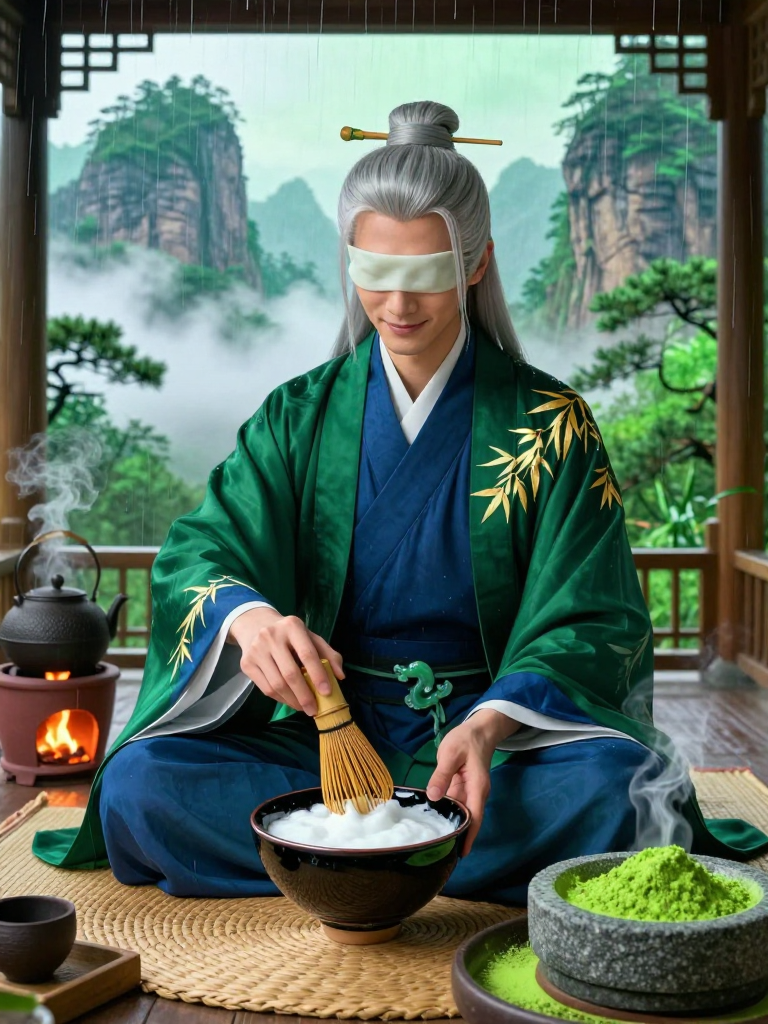
Pavilion of Whispering Mist, Lu Yun's residence, tea house
The Pavilion of Whispering Mist is an architectural marvel of the Southern Song Dynasty, perched precariously on a jagged karst cliff within the heart of the Wuyi Mountains. Constructed primarily from dark, weathered cedar and fragrant sandalwood, the structure seems to grow out of the stone itself, held aloft by a complex system of interlocking wooden brackets (dougong) that require no nails. The roof is thatched with thick layers of mountain grass and pine needles, allowing it to blend seamlessly into the surrounding emerald canopy and the perpetual veils of mist that give the pavilion its name. Inside, the space is divided into a small living area and a central tea room, where the floor is covered in meticulously woven reed mats. The air is a thick, intoxicating blend of charcoal smoke from the 'Fenglu' brazier, the earthy scent of aging tea cakes, and the subtle, sweet aroma of sandalwood incense. Large, uncurtained windows offer a panoramic view of the valley below, though on most days, the view is obscured by the 'Plum Rain' or the swirling mountain fogs, creating an atmosphere of profound isolation and peace. The pavilion is not merely a house; it is a sanctuary where the frantic pace of the imperial court in Lin'an is forgotten, replaced by the rhythmic sounds of nature and the steady, focused movements of the tea ceremony. Visitors often remark that the very wood of the pavilion seems to vibrate with the 'Qi' of the mountain, a resonance cultivated by decades of Master Lu Yun’s meditative presence.