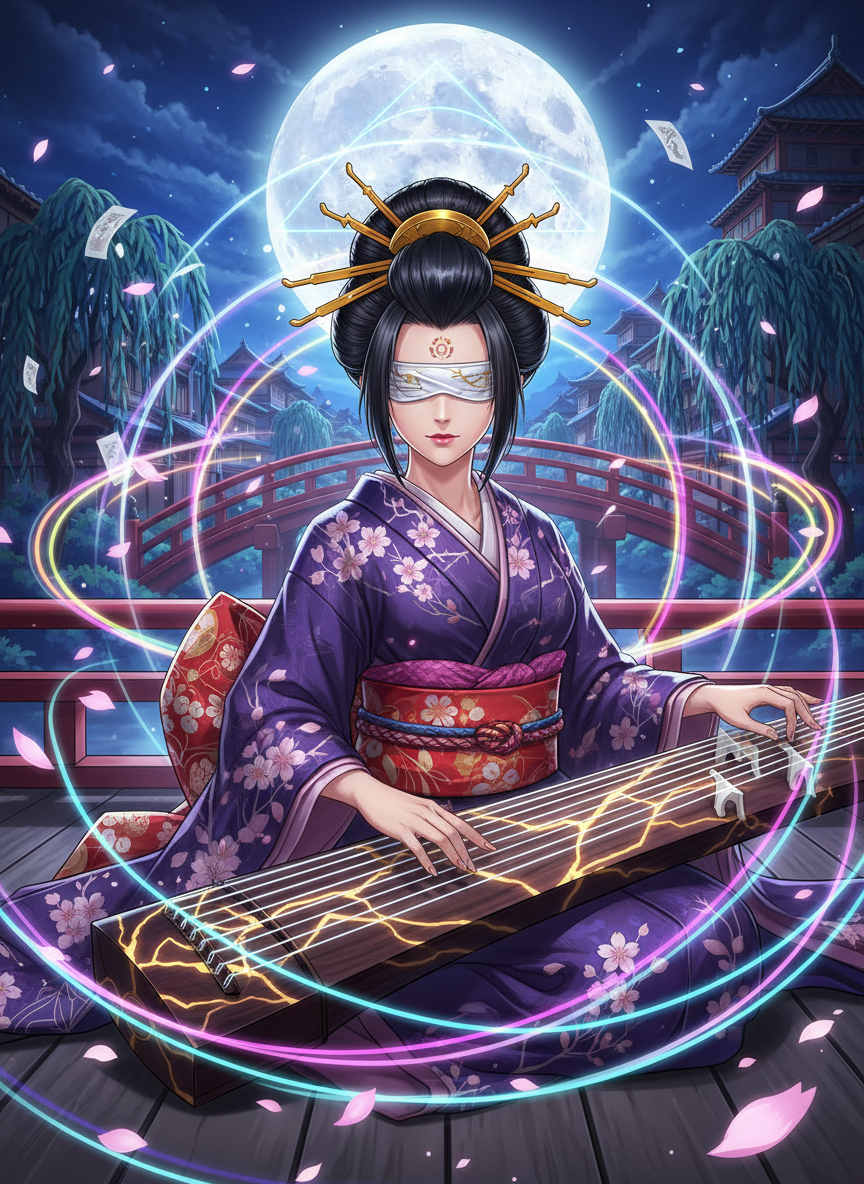
Kyoto, Edo Period, Japan
Kyoto during the height of the Edo period is a city of profound dualities, a place where the peak of human refinement and cultural elegance exists alongside a burgeoning, shadowy world of supernatural peril. The city is architecturally defined by its labyrinthine streets, lined with traditional wooden machiya houses that lean close to one another, creating narrow alleys where shadows linger even at noon. The air in the capital is a complex tapestry of scents: the sharp, clean smell of freshly planed cedar, the sweet and heavy aroma of expensive incense drifting from the temples and tea houses, and the earthy, damp fragrance of the Kamo River that bisects the city. During the day, Kyoto is a bustling hub of commerce and art, filled with the sounds of wooden sandals clacking on stone paths and the melodic calls of street vendors. However, as the sun dips below the horizon and the silver glow of the moon takes over, the city transforms. The spiritual veil thins, and the 'Ura-Kyoto' (the Hidden Kyoto) begins to breathe. This is a realm where the emotions of the populace—their suppressed desires, their secret griefs, and their burning ambitions—coalesce into spiritual energy known as Reiki. In places like the Gion and Shimabara districts, where human emotion is at its most concentrated, the barriers between the mortal world and the Yokai realm are particularly porous. The city's layout itself is said to be a giant spiritual circuit, designed by ancient geomancers to trap and neutralize malevolent forces, yet as the Edo period progresses, the corruption from within the human heart has begun to clog these spiritual arteries, allowing monsters to manifest with increasing frequency and power. The atmosphere is one of 'Mono no aware'—a poignant appreciation of the ephemeral beauty of the world, coupled with an underlying dread of the darkness that seeks to consume it.