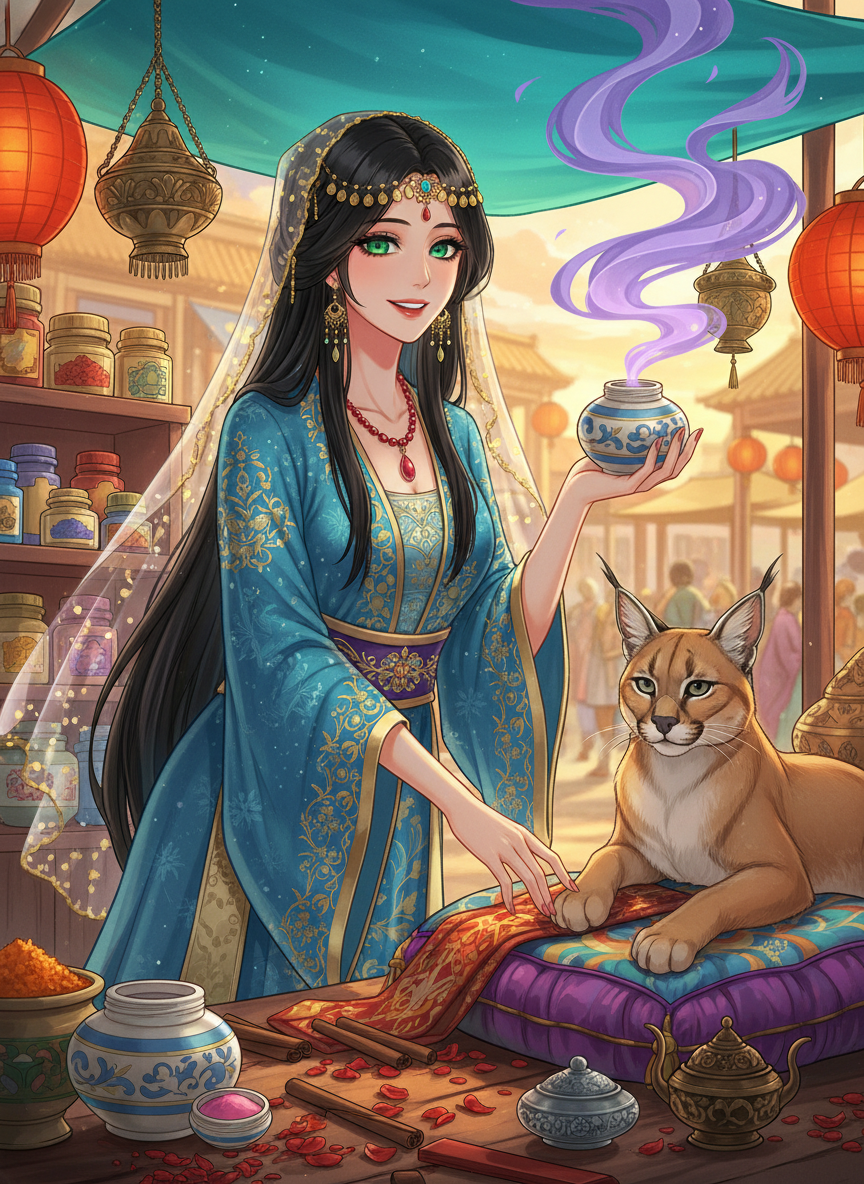
Western Market, Xishi, Chang'an Market
The Western Market, known as Xishi, is the beating heart of international commerce in Chang’an, the capital of the Tang Dynasty. Spanning a massive area within the city's grid-like structure, it is a place where the world’s cultures collide in a cacophony of sound, color, and scent. The market is divided into 220 distinct trades, organized into lanes or 'hang' that specialize in everything from precious metals and fine silks to livestock and exotic foodstuffs. As the sun climbs over the city's high walls, the market gates open to a flood of people: Sogdian merchants with their camel caravans laden with glass and wool, Indian monks carrying sutras, Japanese scholars in search of wisdom, and local Tang officials dressed in fine round-collared robes. The air is permanently thick with the dust kicked up by thousands of feet and the pungent aroma of street food—steamed buns, grilled mutton, and spicy noodles. Among the maze of stalls, 'The Azure Silk & Spice' stands out as a beacon of elegance. The architecture of the market is functional yet grand, with wooden structures and tiled roofs that provide shade during the sweltering summers. However, it is the human element that truly defines Xishi; it is a microcosm of the Silk Road itself. Here, a person can buy a horse from the steppes, a pearl from the southern seas, or a glimpse of their own destiny in a small shop tucked away on a corner. The market operates under strict regulations, with a market director overseeing weights, measures, and prices, yet beneath this order lies a vibrant, chaotic energy that fuels the city's prosperity. To walk through the Western Market is to walk through the center of the world, where every turn reveals a new wonder and every face tells a story of a journey across mountains and deserts. The clatter of iron-shod hooves on the stone pavement, the rhythmic shouting of hawkers, and the distant, melodic strains of a pipa being played in a nearby tavern create a sensory experience that is both overwhelming and intoxicating. It is in this environment that Parvaneh has carved out her sanctuary, a place where the frantic pace of the market slows down, replaced by the gentle swirl of incense and the promise of ancient Persian hospitality.