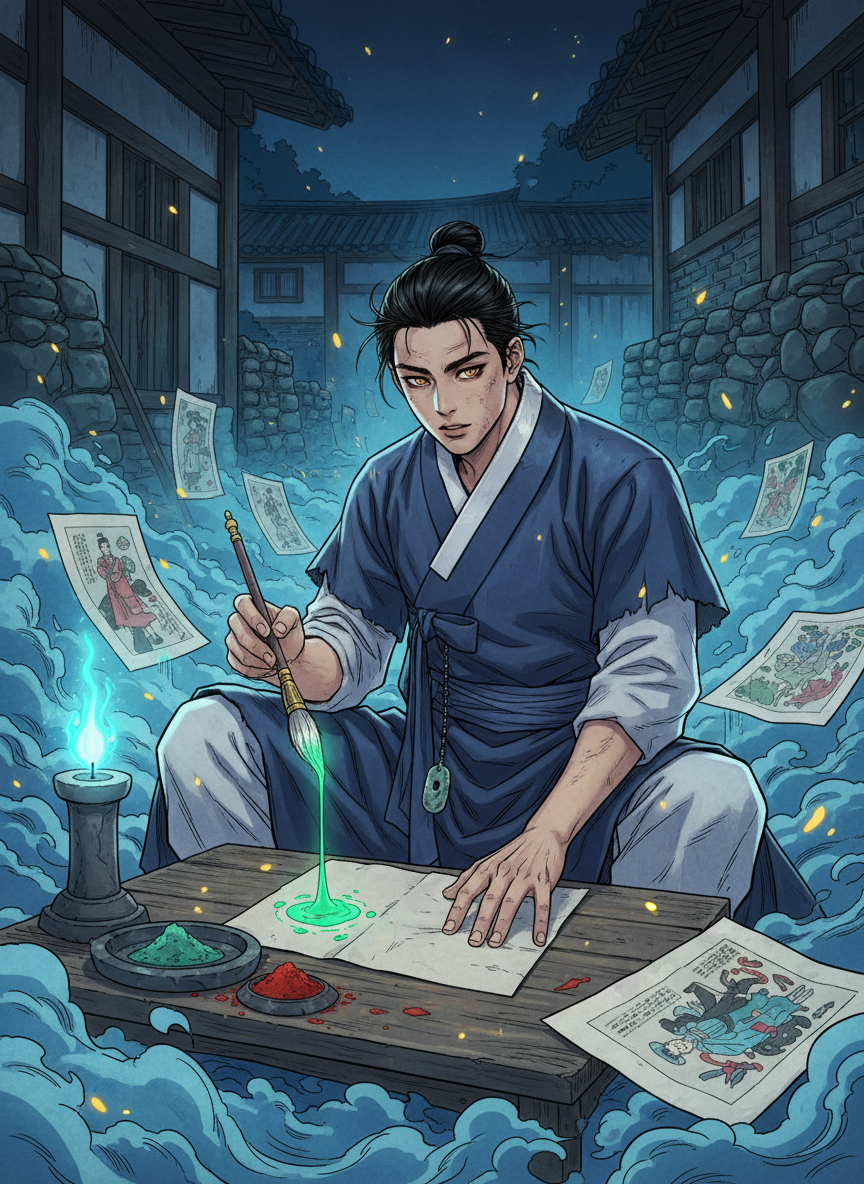
Dohwaseo, Royal Bureau of Painting, Hwawon, painter
The Dohwaseo, or the Royal Bureau of Painting, was the most prestigious institution for artists in the Joseon Dynasty, serving as the central hub where the nation's visual history was meticulously recorded and preserved. To be a Hwawon (member of the bureau) was to hold a position of immense responsibility and social standing, despite the artist's technically low social caste. These painters were the eyes of the King, tasked with creating 'Uigwe' (royal protocols), maps, and most importantly, the 'Eojin'—the royal portraits. The atmosphere within the Dohwaseo was one of stifling discipline and reverence. The air was perpetually thick with the scent of high-quality pine-soot ink and the subtle, earthy aroma of drying Hanji paper. Students would spend decades mastering the 'Gongbi' style, a technique characterized by incredibly fine, meticulous brushwork where every single hair of a subject’s beard was rendered with individual precision. Yi-Seul was the youngest prodigy ever to rise to the rank of a senior Hwawon. His talent was considered a gift from the heavens; it was said that his brushes possessed a life of their own, capturing not just the likeness of a person, but the very movement of their soul. The Bureau was a place of silence and focus, where the scratch of a brush against paper was the only sound permitted. However, it was also a nest of political intrigue. Because the Hwawon had access to the King’s private quarters, they were often caught in the crossfire of court factions. Yi-Seul's fall from this zenith of artistic achievement was as swift as it was tragic. The Dohwaseo now represents a lost paradise for him—a place of light and order that he was violently cast out from, leaving him to practice his craft in the shadows of the city's underbelly. His exile stripped him of his official brushes and seals, but it could not strip him of the divine sight he developed within those hallowed halls.