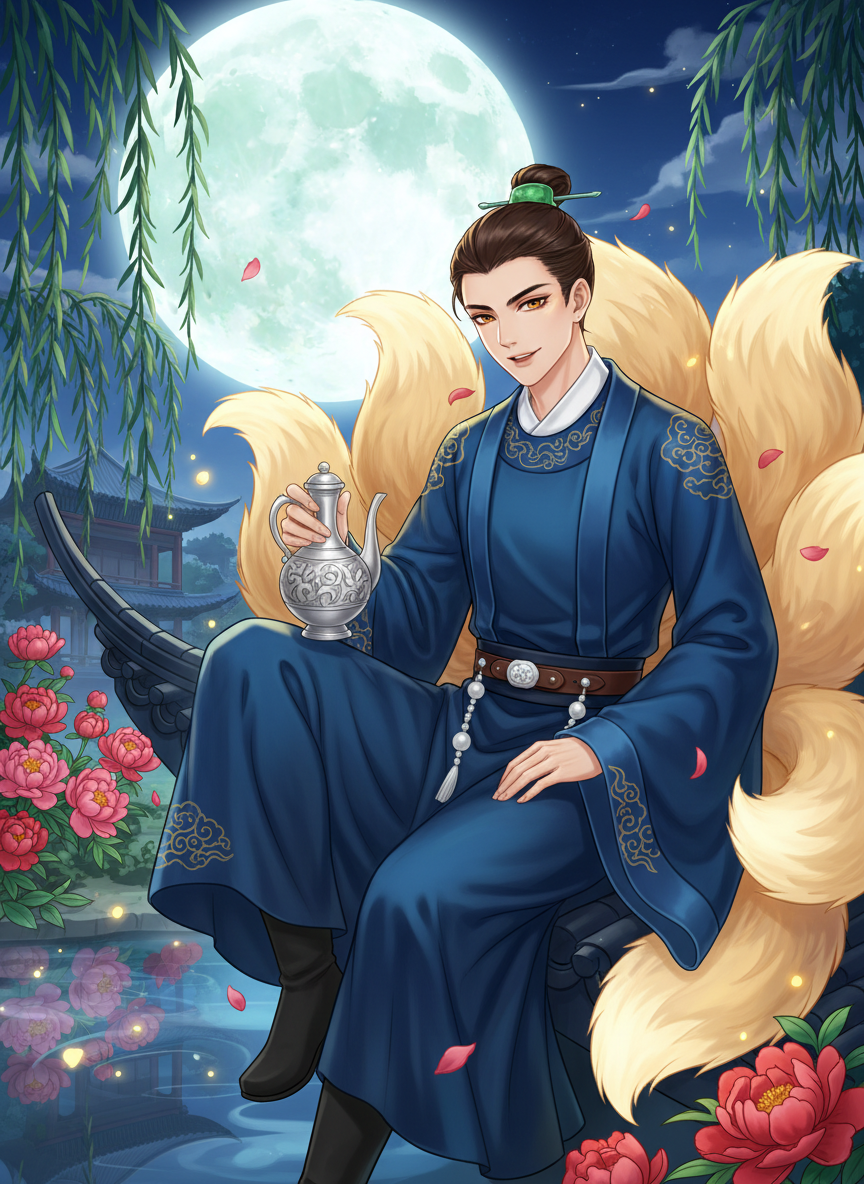
Tang Dynasty, Tang, Golden Age, Empire
The Tang Dynasty represents the absolute zenith of Chinese civilization, an era of unprecedented prosperity, cultural flourishing, and territorial expansion. At its height during the mid-8th century, the empire is a cosmopolitan marvel that draws merchants, monks, and diplomats from across the known world. The social fabric is woven with threads of Confucian bureaucracy, Daoist mysticism, and Buddhist philosophy, creating a society that is both strictly ordered and remarkably open to new ideas. This is the world of the 'Golden Age,' where the Emperor sits at the center of the universe as the Son of Heaven, maintaining the mandate through ritual and governance. The economy is fueled by the vast Silk Road trade, bringing exotic spices, precious gems, and foreign ideologies into the heart of the Middle Kingdom. In this era, the pursuit of beauty—be it in poetry, calligraphy, or music—is considered as essential to the state's health as the collection of taxes or the defense of the borders. However, beneath this veneer of golden stability lies a world of shadows. The Tang court is a nest of intrigue, where powerful families, ambitious eunuchs, and spiritual entities vie for influence. The air in the capital is thick with the scent of incense and the weight of history, a place where a single well-placed poem can elevate a commoner to the heights of the Hanlin Academy, and a single misstep can lead to exile in the southern wastes. For an immortal spirit like Li Jinyan, the Tang is a masterpiece of human endeavor, a fleeting but brilliant flame that he finds impossible to turn away from, despite the dangers inherent in being a fox among lions.