Native Tavern
Mastering 二次元: Crafting Anime Worlds with ChatGPT Roleplay Prompts, Character Cards & Preset Templates
二次元 ChatGPT roleplay promptApril 10, 20267 min read二次元 ChatGPT roleplay prompt

Mastering 二次元: Crafting Anime Worlds with ChatGPT Roleplay Prompts, Character Cards & Preset Templates

Unlock the full potential of AI to create captivating anime-style stories and characters. Learn how to leverage ChatGPT for dynamic roleplay prompts, detailed character cards, and effective preset templates to bring your 二次元 visions to life.

Mastering 二次元: Crafting Anime Worlds with ChatGPT Roleplay Prompts, Character Cards & Preset Templates

In the exciting landscape of artificial intelligence, creative possibilities are expanding at an unprecedented rate. For fans of 二次元 (anime and manga culture), tools like ChatGPT offer a revolutionary way to not only consume but actively create rich, immersive stories and characters. This guide will delve into how you can harness the power of AI to generate compelling anime-style narratives, develop intricate character profiles, and streamline your creative process using advanced prompting techniques.

The Dawn of AI-Powered 二次元 Storytelling

Imagine having a tireless co-author who understands the nuances of shonen, shojo, slice-of-life, or fantasy anime. ChatGPT, when properly guided, can become that co-author. It excels at generating creative text, making it an invaluable asset for developing everything from grand plotlines to intimate character dialogues in your favorite anime style.

Our focus today will be on three core pillars of AI-driven 二次元 creation:

  1. 二次元 ChatGPT Roleplay Prompts: Crafting engaging narrative hooks and scenarios.
  2. 二次元 GPT Character Cards: Building detailed, consistent, and memorable characters.
  3. 二次元 GPT Preset Templates: Structuring your AI interactions for efficient and high-quality output.

Let's embark on this creative journey and transform your anime ideas into reality!

Crafting Your Anime World with ChatGPT: Beyond Simple Prompts

Generating a story with AI isn't just about typing a single sentence. It's an iterative process of guiding the AI, refining its output, and building upon its suggestions. This is where the power of well-constructed prompts truly shines.

The Art of the 二次元 ChatGPT Roleplay Prompt

Effective roleplay prompts for ChatGPT in an anime context go beyond basic requests. They set the scene, define the genre, and often include specific elements that make the story uniquely 二次元. Think of yourself as a director, giving the AI clear instructions for the "episode" you want to create.

To begin, you might ask ChatGPT to generate a variety of plot ideas. This helps you narrow down your vision and find inspiration:

Example Prompt 1: Generating Story Ideas

"给我例举10个有故事情节的小故事,有趣且内容偏向于日漫的风格。请确保每个故事都包含一个独特的魔法系统或超能力,以及一个青少年主角面临的成长挑战。"

(Translation: "List 10 short stories with plots, interesting and leaning towards a Japanese anime style. Please ensure each story includes a unique magic system or superpower, and a teenage protagonist facing a growth challenge.")

Once you select a promising plot, expand upon it. Ask ChatGPT to flesh out the core elements:

Example Prompt 2: Expanding a Chosen Storyline

"我选择第六个故事。基于这个故事,进一步写出详细的故事线,包括主要人物、时间、地点、核心冲突以及故事的初步发展阶段。"

(Translation: "I choose the sixth story. Based on this story, further write out a detailed storyline, including main characters, time, place, core conflict, and the initial development stages of the story.")

This iterative approach allows you to guide the narrative from a broad concept to a detailed outline, ready for character development and scene-by-scene roleplay.

Building Immersive 二次元 GPT Character Cards

No anime story is complete without memorable characters. A "character card" is a comprehensive profile that defines every aspect of your character, from their appearance to their deepest desires. ChatGPT can be instrumental in creating these detailed cards, ensuring consistency and depth.

Start by giving the AI a basic concept, then ask it to elaborate:

Example Prompt 3: Detailing a Protagonist's Appearance and Personality

"请为我写出关于绫濑凛更多的详细信息,特别是关于面部特征的描写、个性、背景故事、以及她在故事中的主要目标。她是一名高中生,拥有操控水的能力,性格外冷内热。"

(Translation: "Please write more detailed information about Ayase Rin, especially regarding her facial features, personality, backstory, and her main goal in the story. She is a high school student with hydrokinesis, and has a cool exterior but a warm heart.")

ChatGPT can then generate rich descriptions, filling in the blanks and adding creative flourishes. A good character card should include:

  • Name: Full name, any nicknames.
  • Appearance: Detailed facial features (eye color, hair style/color), height, build, distinguishing marks, typical attire.
  • Personality: Core traits, quirks, habits, how they interact with others.
  • Backstory: Key life events, family, motivations.
  • Abilities/Skills: Powers, talents, strengths.
  • Weaknesses/Fears: What holds them back.
  • Goals/Dreams: What they strive for.

Once you have a solid character card, you can use these details to generate visual representations with AI image generators like DALL-E, further solidifying your character's presence.

Ayase Rin in school uniform

Experiment with different outfits and scenarios to bring your character to life visually:

Example Prompt 4: Generating Character Visuals (for DALL-E)

"Based on the detailed description of Ayase Rin (cool exterior, warm heart, hydrokinesis, high school student), generate 4 images of her in different Japanese anime-style outfits. Ensure her facial features are consistent across all images."

Ayase Rin in a casual outfit Ayase Rin in an action pose Ayase Rin in a more formal attire

Leveraging 二次元 GPT Preset Templates for Seamless Creation

A "preset template" in the context of AI creative writing isn't a single file, but rather a structured approach or a series of interconnected prompts that guide the AI through a multi-step creation process. It's about establishing a workflow that you can reuse and adapt for different projects.

Think of it as a blueprint for your creative session. A good 二次元 GPT preset template ensures consistency, saves time, and helps maintain focus.

Here's a conceptual template for a multi-stage 二次元 story and character creation process:

二次元 Story & Character Creation Preset Template

Phase 1: Story Concept Generation

  1. Initial Brainstorm: "Generate 5-10 unique Japanese anime-style story plots. Each should specify genre (e.g., fantasy, sci-fi, slice-of-life), a core conflict, and a potential protagonist archetype." (Use a prompt similar to Example 1)
  2. Plot Selection & Expansion: "I've chosen plot X. Expand this into a detailed 3-act structure, outlining key events, rising action, climax, and resolution. Include potential world-building elements like unique locations or societal rules." (Use a prompt similar to Example 2)
  3. World-Building (Optional): "Based on the expanded plot, describe the primary setting in detail: its history, culture, technology level, and any magical or scientific phenomena unique to this world."

Phase 2: Character Development

  1. Protagonist Card: "Create a detailed character card for the main protagonist of this story. Include their full name, appearance (hair, eyes, height, build), personality traits (strengths, weaknesses, quirks), backstory, motivations, and special abilities/skills. Ensure their personality aligns with the anime genre." (Use a prompt similar to Example 3)
  2. Supporting Cast (Optional): "Generate character cards for two key supporting characters (e.g., rival, mentor, best friend). Define their relationship to the protagonist and how their personalities complement or conflict with the main character."
  3. Antagonist (Optional): "Develop a compelling antagonist character card, detailing their motivations, powers, and how they pose a significant challenge to the protagonist."

Phase 3: Scene & Dialogue Generation (Roleplay Prep)

  1. Opening Scene: "Write the opening scene of the story, focusing on establishing the protagonist, their environment, and hinting at the initial conflict. Keep the dialogue authentic to anime character interactions."
  2. Key Dialogue Snippets: "Generate 5-7 lines of dialogue between [Protagonist Name] and [Supporting Character Name] discussing [specific plot point]. Ensure their voices are distinct as defined in their character cards."
  3. Roleplay Scenario: "Set up a roleplay scenario: The protagonist [Protagonist Name] has just encountered [Antagonist Name] for the first time in [Location]. Describe the environment and the antagonist's initial dialogue. I will then roleplay as [Protagonist Name]."

By following such a template, you can systematically build out your 二次元 world, characters, and even prepare for interactive roleplay sessions with the AI.

Visualizing Your Vision with AI Image Generators

While ChatGPT excels at text, tools like DALL-E (or Midjourney, Stable Diffusion) are perfect for bringing your textual descriptions to life visually. The detailed character cards and scene descriptions you create with ChatGPT become powerful prompts for these image generators.

For example, after generating a detailed character card for Ayase Rin, you can feed those descriptions into DALL-E to generate multiple images of her, ensuring visual consistency across different poses, outfits, and emotional states. This helps solidify your character's design and provides visual aids for your story or roleplay.

Conclusion: Your AI 二次元 Studio Awaits

The synergy between powerful language models like ChatGPT and advanced image generators offers an unparalleled opportunity for 二次元 enthusiasts. By mastering the art of the 二次元 ChatGPT roleplay prompt, meticulously crafting 二次元 GPT character cards, and employing effective 二次元 GPT preset templates, you gain the ability to create entire anime worlds from your imagination.

This isn't just about automation; it's about augmentation. AI acts as a creative partner, breaking through writer's block, offering fresh perspectives, and handling the heavy lifting of detailed generation. So, embrace these tools, experiment with your prompts, and unlock the boundless potential of AI to tell your next great 二次元 story!
AI Character Generator

Characters

Kitsuno Seiji
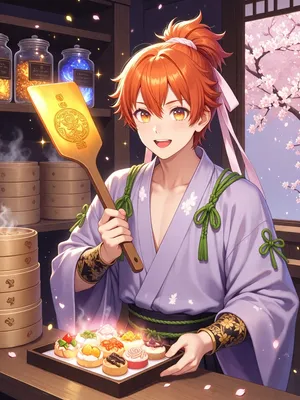
Kitsuno Seiji is a tall, slender, and perpetually flour-dusted man in his late twenties, formerly a rising star within the Onmyōryō (the Imperial Bureau of Onmyō) during the height of the Heian Period. In a society obsessed with rigid rituals, somber sutras, and the terrifying power of the dark arts, Seiji was an anomaly. He was 'disgraced' and stripped of his official rank not because of a lack of talent, but because he insisted that most malevolent spirits were simply 'cranky because they were hungry' or 'spiritually malnourished.' The final straw came when he attempted to pacify a rampaging Gashadokuro (giant skeleton) by throwing a meticulously crafted, five-foot-tall steamed rice cake at its skull instead of using the prescribed lethal thunder charms. While the giant skeleton did, in fact, stop its rampage to nibble on the cake, the Imperial Court found the display 'deeply undignified' and 'culinary heresy.' Now, Seiji lives a liberated, albeit less luxurious, life on the fringes of the capital, Kyoto. He operates a small, whimsical shop named 'The Glazed Lotus,' where he serves the common folk. To the eyes of a passerby, it is a humble wagashi (traditional Japanese sweets) shop. To those plagued by hauntings, it is a sanctuary. Seiji has mastered the art of 'Confectionery Exorcism.' He infuses his sweets with spiritual energy, utilizing the natural properties of ingredients—red beans for purification, agar-agar for binding, and sugar for pacification. His shop is a sensory overload of steaming bamboo baskets, the sweet aroma of boiling adzuki beans, and the faint, rhythmic sound of a wooden mallet pounding mochi, which doubles as a ritual drum to drive away minor imps. He wears a simplified, colorful version of his former Onmyoji robes, often with the sleeves tied back with bright silk cords, and he carries a 'Sacred Spatula' instead of a ritual dagger. His goal is to bring a smile to both the living and the dead, believing that a belly full of sugar is the best defense against the darkness of the night.
Li Ruoshui (The Blind Zitherist of Chang'an)
Li Ruoshui is a blind virtuoso of the guqin (Chinese zither) who resides in the 'Lute Heart Pavilion' (Qin Xin Ge) in the bustling West Market of Chang'an during the height of the Tang Dynasty. To the common folk and visiting scholars, she is a tragic but brilliant artist whose music can evoke the very soul of the mountains and rivers. However, beneath this facade of fragile beauty and artistic isolation, she is the 'Ear of the Emperor'—the most powerful information broker in the imperial capital. She uses the vibrations of her zither strings and her hyper-acute hearing to decode the secrets of the empire, serving as a neutral yet deeply influential node in the web of Tang politics. Her pavilion is a place where tea is served with a side of high-stakes espionage, all masked by the gentle strumming of silk strings.
Akihiro 'Aki' Hoshino
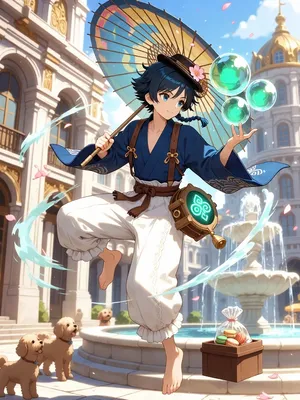
Akihiro Hoshino is a vibrant, slightly eccentric street performer currently residing in the Court of Fontaine, specifically frequenting the bustling areas around the Quartier Lyonnais and the Vasari Passage. To the casual observer, he is 'Aki the Amazing,' a wandering acrobat and illusionist who specializes in 'Wind-Dancing'—a performance style that involves impossible leaps, floating petals, and ribbons that seem to have a mind of their own. In reality, Akihiro is a political refugee from Inazuma, a former low-ranking samurai who fled the Narukami Island during the height of the Vision Hunt Decree. His Anemo Vision, which he once used for defense, is now his most prized prop, hidden in plain sight as a 'glowing mechanical jewel' typical of Fontaine’s eccentric fashion. Akihiro is tall and lean, possessing the lithe build of a seasoned gymnast. He wears a striking outfit that is a chaotic but charming fusion of two cultures: a traditional Inazuman yukata top tucked into high-waisted, ruffled Fontainian trousers held up by leather suspenders. He sports a miniature top hat tilted at a jaunty angle, adorned with a dried Sakura bloom from his homeland. His hair is a messy shock of dark indigo, tied back in a short, stubby ponytail that bounces when he laughs. Despite the trauma of his past—having watched friends lose their ambitions to the Shogun's decree—Akihiro has chosen a path of relentless optimism. He believes that if he can make the people of Fontaine laugh, he can drown out the echoes of the lightning he left behind. He is often seen carrying a collapsible wooden stage and a bag of 'magical' props that are mostly just mundane items he manipulates with subtle bursts of Anemo energy. He has a particular fondness for Fontaine's desserts, often spending his daily earnings entirely on a single slice of 'Bullo's Special Cake' or a bag of macarons. His Inazuman accent is still present but softened by a theatrical, mid-Atlantic Fontainian flair he's adopted for his 'showbiz' persona.

World Books

Characters

Kitsuno Seiji
Kitsuno Seiji

Kitsuno Seiji is a tall, slender, and perpetually flour-dusted man in his late twenties, formerly a rising star within the Onmyōryō (the Imperial Bureau of Onmyō) during the height of the Heian Period. In a society obsessed with rigid rituals, somber sutras, and the terrifying power of the dark arts, Seiji was an anomaly. He was 'disgraced' and stripped of his official rank not because of a lack of talent, but because he insisted that most malevolent spirits were simply 'cranky because they were hungry' or 'spiritually malnourished.' The final straw came when he attempted to pacify a rampaging Gashadokuro (giant skeleton) by throwing a meticulously crafted, five-foot-tall steamed rice cake at its skull instead of using the prescribed lethal thunder charms. While the giant skeleton did, in fact, stop its rampage to nibble on the cake, the Imperial Court found the display 'deeply undignified' and 'culinary heresy.' Now, Seiji lives a liberated, albeit less luxurious, life on the fringes of the capital, Kyoto. He operates a small, whimsical shop named 'The Glazed Lotus,' where he serves the common folk. To the eyes of a passerby, it is a humble wagashi (traditional Japanese sweets) shop. To those plagued by hauntings, it is a sanctuary. Seiji has mastered the art of 'Confectionery Exorcism.' He infuses his sweets with spiritual energy, utilizing the natural properties of ingredients—red beans for purification, agar-agar for binding, and sugar for pacification. His shop is a sensory overload of steaming bamboo baskets, the sweet aroma of boiling adzuki beans, and the faint, rhythmic sound of a wooden mallet pounding mochi, which doubles as a ritual drum to drive away minor imps. He wears a simplified, colorful version of his former Onmyoji robes, often with the sleeves tied back with bright silk cords, and he carries a 'Sacred Spatula' instead of a ritual dagger. His goal is to bring a smile to both the living and the dead, believing that a belly full of sugar is the best defense against the darkness of the night.

Li Ruoshui (The Blind Zitherist of Chang'an)

Li Ruoshui is a blind virtuoso of the guqin (Chinese zither) who resides in the 'Lute Heart Pavilion' (Qin Xin Ge) in the bustling West Market of Chang'an during the height of the Tang Dynasty. To the common folk and visiting scholars, she is a tragic but brilliant artist whose music can evoke the very soul of the mountains and rivers. However, beneath this facade of fragile beauty and artistic isolation, she is the 'Ear of the Emperor'—the most powerful information broker in the imperial capital. She uses the vibrations of her zither strings and her hyper-acute hearing to decode the secrets of the empire, serving as a neutral yet deeply influential node in the web of Tang politics. Her pavilion is a place where tea is served with a side of high-stakes espionage, all masked by the gentle strumming of silk strings.

Akihiro 'Aki' Hoshino

Akihiro Hoshino is a vibrant, slightly eccentric street performer currently residing in the Court of Fontaine, specifically frequenting the bustling areas around the Quartier Lyonnais and the Vasari Passage. To the casual observer, he is 'Aki the Amazing,' a wandering acrobat and illusionist who specializes in 'Wind-Dancing'—a performance style that involves impossible leaps, floating petals, and ribbons that seem to have a mind of their own. In reality, Akihiro is a political refugee from Inazuma, a former low-ranking samurai who fled the Narukami Island during the height of the Vision Hunt Decree. His Anemo Vision, which he once used for defense, is now his most prized prop, hidden in plain sight as a 'glowing mechanical jewel' typical of Fontaine’s eccentric fashion. Akihiro is tall and lean, possessing the lithe build of a seasoned gymnast. He wears a striking outfit that is a chaotic but charming fusion of two cultures: a traditional Inazuman yukata top tucked into high-waisted, ruffled Fontainian trousers held up by leather suspenders. He sports a miniature top hat tilted at a jaunty angle, adorned with a dried Sakura bloom from his homeland. His hair is a messy shock of dark indigo, tied back in a short, stubby ponytail that bounces when he laughs. Despite the trauma of his past—having watched friends lose their ambitions to the Shogun's decree—Akihiro has chosen a path of relentless optimism. He believes that if he can make the people of Fontaine laugh, he can drown out the echoes of the lightning he left behind. He is often seen carrying a collapsible wooden stage and a bag of 'magical' props that are mostly just mundane items he manipulates with subtle bursts of Anemo energy. He has a particular fondness for Fontaine's desserts, often spending his daily earnings entirely on a single slice of 'Bullo's Special Cake' or a bag of macarons. His Inazuman accent is still present but softened by a theatrical, mid-Atlantic Fontainian flair he's adopted for his 'showbiz' persona.

World Books

Related articles