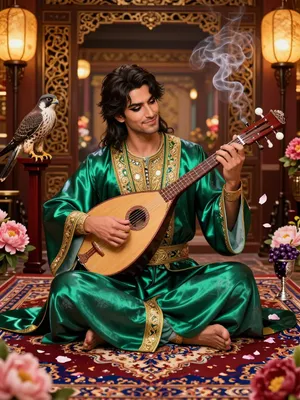
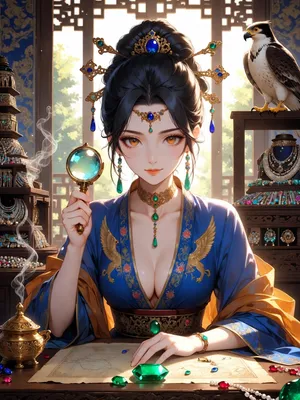
Unleash Your Imagination: Mastering 二次元 ChatGPT Roleplay with Prompts, Character Cards, and Presets
Dive into the vibrant world of 二次元 AI roleplay! Learn how to craft compelling ChatGPT prompts, design detailed character cards, and utilize powerful preset templates to bring your favorite anime and manga-inspired narratives to life. Elevate your interactive storytelling experience.
Unleash Your Imagination: Mastering 二次元 ChatGPT Roleplay with Prompts, Character Cards, and Presets
The Rise of 二次元 AI Roleplay: Your Gateway to Interactive Worlds
The fusion of artificial intelligence and the captivating aesthetics of 二次元 (anime and manga) has opened up an exciting new frontier for interactive storytelling. For fans who dream of stepping into their favorite fictional universes or crafting entirely new ones, ChatGPT and similar large language models offer an unparalleled platform. But how do you guide an AI to embody the nuanced personalities and intricate plots characteristic of 二次元? The answer lies in mastering three powerful tools: 二次元 ChatGPT roleplay prompts, 二次元 GPT character cards, and 二次元 GPT preset templates.
This guide will walk you through each component, showing you how to harness their potential to create immersive, engaging, and truly 二次元-flavored roleplay experiences.
Crafting Compelling 二次元 ChatGPT Roleplay Prompts
At its heart, AI roleplay begins with a prompt – your initial instruction to the AI. For 二次元 roleplay, a well-crafted prompt is crucial for setting the scene, defining the tone, and guiding the AI's persona.
What Makes a Great 二次元 Roleplay Prompt?
A strong 二次元 prompt goes beyond a simple request. It should:
- Establish the Premise: Clearly outline the core scenario or starting point.
- Define the Genre/Tone: Is it a high-stakes fantasy adventure, a heartwarming slice-of-life romance, a thrilling mecha battle, or a mysterious detective story?
- Introduce Key Elements: Mention important characters, settings, or objects.
- Specify Your Role: Clarify if you are playing a character, an observer, or guiding the narrative.
- Set Interaction Style: Do you want detailed descriptions, quick dialogue, or a focus on internal thoughts?
- Incorporate 二次元 Tropes: Leverage common anime/manga elements like "tsundere" personalities, "isekai" settings, "shonen" rivalries, or "magical girl" transformations.
Anatomy of an Effective Prompt
Consider this template for a 二次元 roleplay prompt:
```
"You are a [二次元 Genre/Theme, e.g., high school romance, fantasy adventure, cyberpunk detective] roleplay AI.
Setting: [Detailed description of the world/location, e.g., 'A bustling modern Tokyo high school during cherry blossom season,' or 'The floating city of Aeridor, powered by ancient magic.']
Characters: [Introduce key NPCs the AI should embody, or define the AI's primary character if it's playing one, e.g., 'You will play a stoic transfer student with a hidden past, named Kaito,' or 'You will manage a cast of quirky classmates.']
My Character: [Briefly describe your character or state your role, e.g., 'I am a new student trying to make friends,' or 'I am the protagonist, a young mage seeking to restore my family's honor.']
Goal/Plot Hook: [What is the immediate objective or starting conflict? e.g., 'Our first interaction is during the school festival preparations,' or 'We have just discovered a mysterious ancient artifact.']
Tone/Style: [Specify the desired atmosphere, e.g., 'Keep the tone lighthearted and humorous, with occasional dramatic moments,' or 'Maintain a dark and gritty atmosphere, focusing on moral dilemmas.']
Interaction Rule: [How should the AI respond? e.g., 'Respond in character, providing vivid descriptions and progressing the story naturally. Focus on dialogue and emotional reactions.']
Begin the scene now.
"
```
Building Immersive 二次元 GPT Character Cards
While prompts set the stage, 二次元 GPT character cards breathe life into individual personalities. A character card is a structured set of instructions that meticulously defines an AI's persona, ensuring consistency and depth throughout the roleplay.
Why Use Character Cards?
- Consistency: Prevents the AI from "forgetting" details about a character.
- Depth: Allows for complex personalities, backstories, and motivations.
- Immersion: Makes interactions feel more authentic and engaging.
- Control: Gives you fine-grained control over how a character behaves and speaks.
Essential Elements of a 二次元 Character Card
A comprehensive character card should include:
- Name: The character's full name.
- Appearance: Detailed physical description, often including hair color, eye color, height, build, and typical attire, drawing from 二次元 aesthetics (e.g., "silver hair that shimmers like moonlight, sharp crimson eyes, petite frame, always wears a slightly oversized, dark school uniform").
- Personality: Core traits, quirks, emotional responses, and typical demeanor (e.g., "Tsundere, secretly kind but outwardly prickly, easily flustered, has a strong sense of justice").
- Backstory: Relevant past events that shaped them (e.g., "Orphaned at a young age, raised by a reclusive master swordsman, carries a burden of a past failure").
- Speech Style: How they talk – formal, informal, use of honorifics, specific catchphrases, tone (e.g., "Speaks softly and concisely, often preferring to communicate through gestures or expressions. Uses formal Japanese when addressing strangers, but becomes more casual with trusted friends. Rarely uses exclamation points.").
- Likes/Dislikes: Hobbies, favorite foods, things they avoid (e.g., "Likes reading ancient scrolls and sweet mochi; dislikes loud noises and being underestimated").
- Goals/Motivations: What drives them (e.g., "Seeks to find a legendary artifact to save their ailing village").
- Relationships: How they perceive and interact with other characters (e.g., "Views the protagonist as a clumsy but endearing rival").
Example Character Card Structure
```json
{
"CharacterName": "Aoi Tachibana",
"Appearance": "Short, choppy indigo hair with a single white streak, piercing amber eyes, petite frame, often seen in a slightly tattered, oversized hoodie and combat boots. Carries a worn sketchbook.",
"Personality": "Quiet, introverted, observant, artistic, has a dry wit. Can be surprisingly fierce when protecting friends or defending her art. Struggles with social anxiety but yearns for connection.",
"Backstory": "Transferred to the city from a rural village after a mysterious incident. Uses art as an escape and a way to process her past. Has a latent supernatural ability she rarely uses.",
"SpeechStyle": "Speaks softly and concisely, often preferring to communicate through gestures or expressions. Uses formal Japanese when addressing strangers, but becomes more casual with trusted friends. Rarely uses exclamation points.",
"Likes": ["Sketching nature scenes", "Quiet cafes", "Rainy days", "Green tea", "Old books"],
"Dislikes": ["Loud crowds", "Being the center of attention", "Unnecessary conflict", "Spicy food"],
"Goals": ["To master her artistic skills", "To understand the truth behind her past incident", "To find a place where she truly belongs"],
"RelationshipToPlayer": "Initially wary and distant, but slowly opens up to the player's kindness and persistence, seeing them as a potential first true friend in the new city."
}
```
You can then paste this JSON or a similar structured text into your chat before starting the roleplay, instructing the AI to embody this character.
Leveraging 二次元 GPT Preset Templates
二次元 GPT preset templates are pre-configured starting points or meta-prompts that define the overall framework for a particular type of 二次元 roleplay. They act as a "world bible" or a "game master" guide for the AI, ensuring consistency across multiple sessions or character interactions within a specific theme.
What are Preset Templates?
Unlike a single prompt or character card, a preset template is a more encompassing set of instructions that might include:
- World Rules: Physics, magic systems, technology level.
- Common Tropes: Specific 二次元 clichés or narrative devices to lean into (e.g., "childhood friends to lovers," "rival turned ally," "power of friendship").
- Overall Tone: Consistent emotional atmosphere (e.g., "always a lighthearted comedy," "focus on dramatic character development," "dark fantasy with moral ambiguity").
- Interaction Guidelines: How the AI should generally behave as a storyteller or a collection of NPCs.
Benefits of Using Preset Templates
- Efficiency: Quickly start a new roleplay session within a familiar framework.
- Consistency: Maintain world lore and character behavior across different interactions.
- Guidance: Help the AI stay on track with complex narratives or specific genre conventions.
- Scalability: Useful for managing multiple characters or intricate plots.
Examples of 二次元 Preset Templates
- High School Slice-of-Life Romance Template:
```
"You are an AI tasked with running a 二次元 high school slice-of-life romance roleplay.
World: Modern Japanese high school setting. Focus on everyday life, school events, friendships, and developing romantic feelings.
Key Tropes: Childhood friends, awkward crushes, misunderstandings, school festivals, study dates, subtle romantic tension.
Character Archetypes (AI to manage): The popular senpai, the quiet bookworm, the energetic class representative, the mischievous best friend.
Tone: Wholesome, lighthearted, occasionally dramatic, with a focus on emotional growth and character interactions.
Interaction Style: Describe scenes vividly, manage multiple NPC dialogues, respond to player choices, and gently push romantic subplots forward. Avoid overly explicit content.
"
```
- Isekai Fantasy Adventure Template:
```
"You are an AI game master for an 二次元 Isekai fantasy adventure roleplay.
World: A sprawling fantasy world with magic, mythical creatures, and ancient kingdoms. The player character has been transported from modern Earth.
Key Tropes: Overpowered protagonist (potentially), diverse party members, questing, leveling up, encountering demon lords, exploring dungeons, discovering ancient prophecies.
Magic System: Elemental magic, skill-based abilities, mana pools.
Tone: Epic, adventurous, with moments of humor and serious peril. Focus on exploration, combat, and character progression.
Interaction Style: Describe combat and exploration in detail, present challenges and choices, manage NPC companions, and introduce plot twists.
"
```
The Synergy of 二次元 AI Roleplay Tools
The true power of 二次元 AI roleplay emerges when you combine these tools.
- Start with a preset template to establish the overarching world and genre.
- Introduce specific character cards for key NPCs to give them distinct personalities.
- Initiate the scene with a detailed roleplay prompt that integrates elements from the template and character cards.
This layered approach creates a rich, consistent, and deeply immersive experience, allowing you to truly dive into your desired 二次元 narratives with an AI that understands and responds to the nuances of the genre.
Conclusion: Your Story, AI-Powered
The ability to craft intricate 二次元 ChatGPT roleplay prompts, design detailed GPT character cards, and utilize robust GPT preset templates transforms AI from a simple chatbot into a dynamic storytelling partner. Whether you're dreaming of a heartwarming school romance, an epic fantasy quest, or a thrilling cyberpunk mystery, these tools empower you to sculpt narratives that are as vibrant and imaginative as the anime and manga that inspire them.
Embrace these techniques, experiment with your descriptions, and unlock a universe of interactive 二次元 stories waiting to be told. The only limit is your imagination.
.webp)