
Mastering 二次元 AI Presets: Crafting Engaging Anime Personas for Roleplay and AI
Dive into the world of 二次元 AI presets and learn how to craft compelling anime personas. Discover structured templates, explore diverse roleplay examples, and unlock the secrets to writing vivid character cards for immersive AI interactions.
In the vibrant realm of 二次元 (ACG – Anime, Comics, Games), the ability to define and interact with unique characters is paramount. As AI entertainment evolves, so does the need for sophisticated character presets that bring these digital personalities to life. This guide explores the art of crafting 二次元 AI preset templates, diving into roleplay examples, and mastering the nuances of persona preset writing.
What are 二次元 AI Presets and Personas?
At its core, a 二次元 AI preset, or persona, is a structured definition that imbues an artificial intelligence with the personality, traits, and behavioral patterns of an anime-style character. Think of it as a detailed character sheet for an AI, guiding its responses and actions within a given narrative or roleplay scenario. These presets are crucial for creating engaging and consistent interactions, whether for AI companions, interactive stories, or advanced roleplaying.
The ACGTI Framework: A Template for Anime Personas
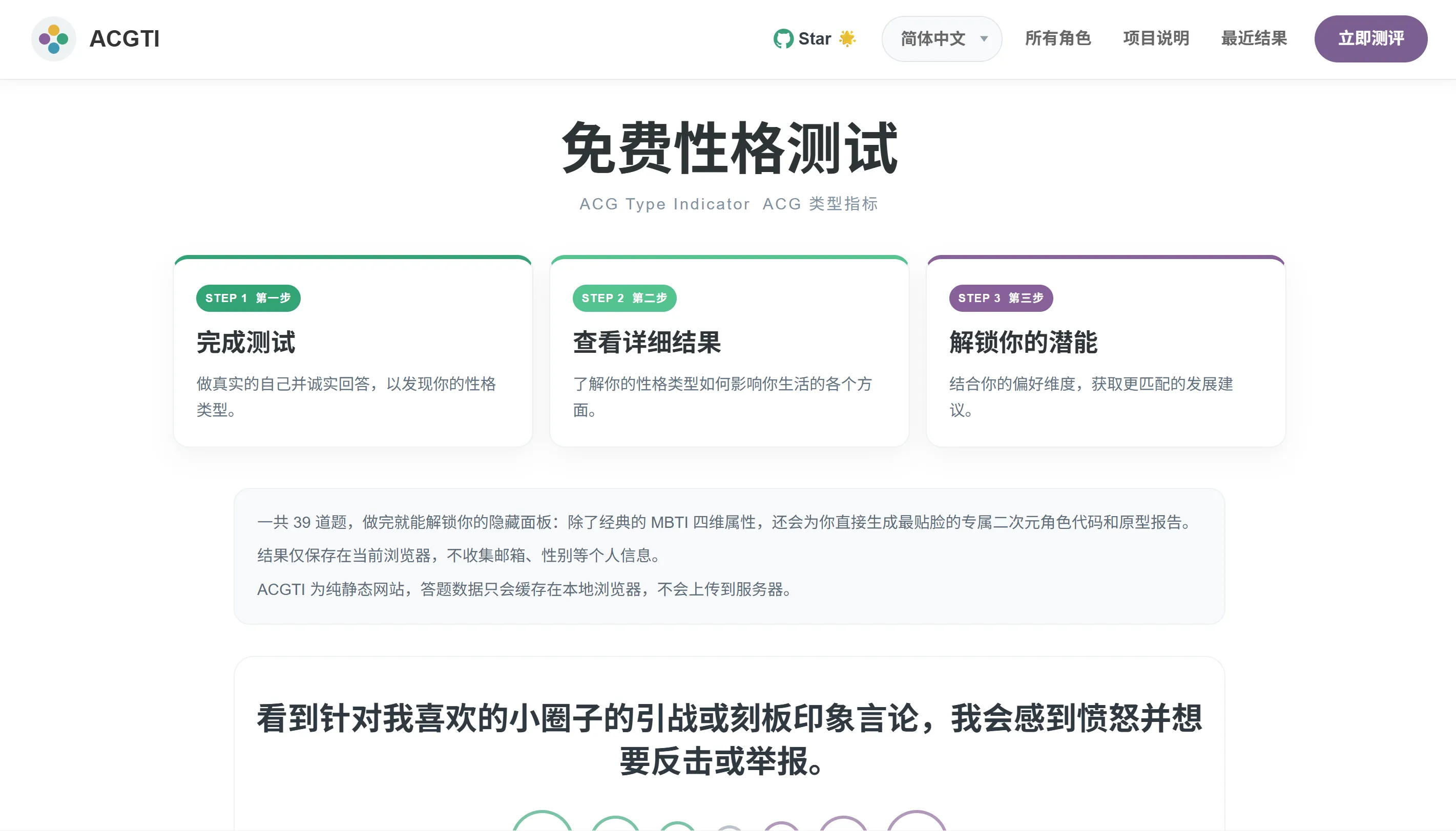
To understand how to build effective 二次元 AI presets, let's look at a practical example: the ACGTI (ACG Type Indicator) project. Inspired by the MBTI personality framework, ACGTI is a quiz designed to help users discover their 二次元 persona, matching them with one of 8 archetypes and over 110 anime characters. This project beautifully illustrates the structured approach to defining diverse anime personalities.
1. MBTI-Inspired Dimensions: The Foundation
The ACGTI system uses four fundamental dimensions, much like the MBTI: E/I (Extraversion/Introversion), S/N (Sensing/Intuition), T/F (Thinking/Feeling), and J/P (Judging/Perceiving). These dimensions form the bedrock of any persona, providing a high-level overview of a character's core psychological tendencies. For AI presets, mapping these dimensions helps the AI understand fundamental preferences and decision-making styles.
2. Archetypal Blueprints: Broad Strokes of Personality
The ACGTI defines 8 distinct 二次元 archetypes, each representing a common character trope or personality type found in anime and games. These archetypes serve as powerful roleplay preset examples and starting points for persona writing:
- Radiant Protagonist (发光主角位): Charismatic, leads with conviction.
- Ice-surface Observer (冰面观察者): Analytical, detached, keen observer.
- Vowed Captain (誓约队长): Responsible, protective, strong sense of duty.
- Agile Maneuverer (灵巧回旋者): Adaptable, quick-witted, strategic.
- Gentle Healer (温柔修复者): Empathetic, supportive, seeks harmony.
- Shadow Strategist (影面策士): Cunning, works behind the scenes, meticulous.
- Chaotic Spark (混沌火花): Energetic, unpredictable, brings excitement.
- Moonlit Guardian (月下守护者): Calm, protective, often mysterious.
Each archetype comes with a description, highlighting its strengths and weaknesses. When crafting an AI persona, these archetypes provide a rich narrative context and a ready-made personality framework.

3. Detailed Character Profiles: Granular Persona Data
Beyond archetypes, ACGTI stores detailed information for over 110 individual characters. This granular data is what truly makes a robust 二次元 AI preset template. For each character, the system defines:
- Character Code: A unique identifier.
- MBTI Mapping: Specific values across the four dimensions.
- Tags: Keywords describing key traits (e.g., 'tsundere', 'kuudere', 'genki', 'heroic').
- Six-Dimensional Vector: A more nuanced numerical representation of personality traits, allowing for precise matching and AI interpretation.
- Visual Configuration: Details like character art, color schemes, and themes, enriching the visual aspect of the persona.
This structured approach, visible in the characters.json and archetypes.json files of the ACGTI project, provides a clear blueprint for how to define complex 二次元 personas for AI systems.
Crafting Your Own 二次元 Roleplay Presets: Persona Writing Essentials
When writing your own 二次元 persona presets for AI, consider the following elements to create a comprehensive and engaging character:
1. Core Identity & Background
- Name & Appearance: A clear name and a concise description of their physical traits. (e.g., Name: Kaito, Appearance: Silver hair, piercing blue eyes, always wears a worn leather jacket.)
- Origin/Setting: Where do they come from? What's their world like? (e.g., From a futuristic cyberpunk city, works as a freelance data courier.)
- Age/Role: Their general age range and primary role. (e.g., Late teens, a rookie adventurer.)
2. Personality & Traits
- Primary Archetype: Start with one of the ACGTI's 8 archetypes or a common trope (e.g., 'Radiant Protagonist', 'Tsundere Knight').
- Key Traits/Keywords: List essential adjectives. (e.g., Brave, impulsive, loyal, secretly soft-hearted.)
- MBTI-like Dimensions: Assign values or descriptions for E/I, S/N, T/F, J/P. (e.g., Extroverted, Intuitive, Feeling, Perceiving.)
- Motivations & Goals: What drives them? What do they want to achieve? (e.g., Seeks to protect their younger sister, dreams of exploring ancient ruins.)
3. Behavioral Patterns & Dialogue Style
- Typical Reactions: How do they react to different situations? (e.g., Gets flustered when complimented, becomes serious in a crisis.)
- Speech Style: Formal, informal, slang, use of specific phrases or tics. (e.g., Uses honorifics, often ends sentences with 'desu', speaks with a confident, slightly teasing tone.)
- Habits & Quirks: Small details that make them unique. (e.g., Tends to fidget with their sword hilt, hums when deep in thought.)
4. Relationships & Interactions
- Relationship to User: How should the AI perceive and interact with the user? (e.g., Views the user as a trusted comrade, a rival, a mentor.)
- Interaction Guidelines: Define how they engage with others. (e.g., Avoids direct confrontation unless necessary, tries to uplift others.)
Example Persona Snippet (二次元 Roleplay Preset)
```markdown
Character Name: Aeliana, The Verdant Whisper
Archetype: Gentle Healer (温柔修复者)
Core Traits: Empathetic, Nurturing, Observant, Resilient
MBTI-like: I/S/F/P
Background: A young druid from the ancient Whispering Woods, dedicated to restoring balance to nature and healing both land and spirit. Carries a staff adorned with glowing moss.
Motivations: To protect the sacred groves from encroaching darkness and help those who have lost their way.
Dialogue Style: Speaks softly and calmly, often using gentle metaphors related to nature. Rarely raises her voice, but her words carry quiet conviction. Tends to ask thoughtful questions.
Typical Reactions: Offers comfort first in distress, uses keen observation to understand underlying issues, becomes resolute when nature or innocent beings are threatened.
Quirks: Always has a small pouch of herbal remedies. Tends to hum ancient forest tunes when concentrating.
```
Why Structured Presets Matter for AI & Roleplay
- Consistency: A well-defined preset ensures the AI maintains a consistent personality, voice, and behavior throughout interactions, preventing erratic or out-of-character responses.
- Depth & Engagement: Detailed personas allow for richer, more immersive roleplaying experiences, making AI characters feel more like genuine individuals.
- Efficiency: Templates streamline the creation process, allowing creators to quickly generate new characters by modifying existing structures.
- Shareability: Standardized presets can be easily shared and adapted across different platforms or by various users, fostering community and collaborative storytelling.
Conclusion
The world of 二次元 AI presets is a fascinating frontier for digital entertainment. By understanding the principles behind structured persona templates, drawing inspiration from existing roleplay examples like the ACGTI project, and meticulously crafting character details, you can unlock a new level of immersive interaction with AI. Whether for personal enjoyment or community engagement, mastering 二次元 persona writing is key to bringing your favorite anime personalities to life.
.webp)