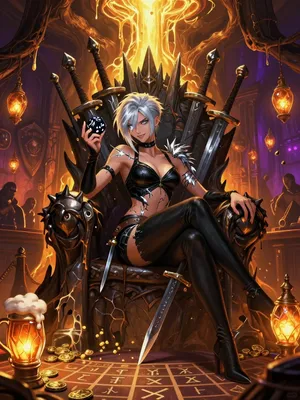
Unlocking 二次元 Worlds: Your Guide to AI Worldbooks & Anime Worldbuilding
Dive into the vibrant universe of 二次元 with AI! Explore how platforms like Qidian provide rich inspiration for crafting detailed AI worldbooks and character lore templates, essential for next-gen anime-style roleplay and content creation.
Unlocking 二次元 Worlds: Your Guide to AI Worldbooks & Anime Worldbuilding
The realm of 二次元 (Erzhuan, referring to anime, manga, and ACG culture) is a treasure trove of intricate narratives, compelling characters, and expansive universes. As AI continues to revolutionize creative industries, the demand for rich, structured lore to power AI-driven storytelling, roleplay, and character generation has never been higher. But where do we find inspiration for these detailed AI worldbooks and anime worldbuilding guides? The answer lies in the very heart of online literature that has captivated millions.
The Foundation: 二次元 Worlds as AI Worldbooks
Platforms like Qidian Reader, a colossal hub for original online literature, offer an unparalleled glimpse into successful worldbuilding. With a dedicated "二次元" category alongside fantasy, sci-fi, and urban genres, it hosts millions of words across countless stories that serve as de facto "AI worldbooks."
Think of a well-developed novel series as a living, breathing database. It contains:
- Extensive Lore: Detailed histories, geographies, magic systems, scientific principles, and societal structures.
- Deep Character Arcs: Protagonists, antagonists, and supporting characters with unique personalities, backstories, motivations, and relationships.
- Event Timelines: Key historical moments, conflicts, and resolutions that shape the narrative.
- Cultural Nuances: Customs, traditions, languages, and philosophies specific to the world.
These elements are precisely what an AI model needs to understand and generate consistent, immersive content. The sheer volume and diversity of 二次元 narratives on platforms like Qidian provide a massive, organically grown dataset for AI to learn the nuances of compelling storytelling and world creation.
AI's Role in Consuming and Creating Worlds
Qidian itself is already integrating AI with features like "AI听读" (AI listening/reading), demonstrating how artificial intelligence can interact with and interpret these rich textual worlds. This is just the tip of the iceberg for how AI can leverage such content.
Crafting Compelling 二次元 Anime Worldbuilding
Effective worldbuilding is the backbone of any engaging 二次元 experience. Whether you're a writer, a game developer, or an AI prompt engineer, understanding these principles is crucial. Drawing from the success of popular 二次元 novels, here's what makes a world truly captivating:
1. Consistency is King
Every rule, every character's ability, every historical event must align. Inconsistency breaks immersion. AI models, when fed a consistent worldbook, can maintain this consistency across generated dialogues, narratives, and character actions.
2. Depth Over Breadth
While a grand scale is appealing, true immersion comes from the details. What do people eat? What are their daily struggles? What are the common superstitions? These small elements make a world feel real. Popular Qidian novels often excel at this, painting vivid pictures of their settings.
3. Integrated Characters
Characters shouldn't just exist in the world; they should be of the world. Their personalities, motivations, and conflicts should be deeply intertwined with the world's history, culture, and challenges. The "角色卡牌" (Character Cards) feature on platforms like Qidian hints at this structured character data.
4. Unique Systems
From magic systems (e.g., cultivation in Xianxia) to advanced technology in sci-fi, a unique and well-defined system adds flavor and allows for creative problem-solving. These systems need clear rules and limitations for AI to utilize them effectively.
5. Conflict and Stakes
A compelling world isn't static. It's filled with internal and external conflicts, power struggles, and high stakes that drive the narrative and make characters' choices meaningful.
The 二次元 AI Lorebook Template: Structuring Your Universe
For AI to effectively generate content within your 二次元 world, you need a structured "lorebook" or "worldbook" template. This isn't just a random collection of facts; it's an organized knowledge base. While Qidian doesn't offer a direct AI template, its "角色卡牌" (Character Cards) feature provides a perfect analogy for structuring detailed character lore that can be extended to world lore.
Components of an Effective AI Lorebook Template:
#### 1. Global World Information
- World Name: The official name of your universe.
- Genre/Themes: (e.g., Fantasy, Sci-Fi, Urban Fantasy, Isekai, Mecha, Romance, Dark Fantasy).
- Key Locations: Names, descriptions, and significance of major cities, continents, realms, or planets.
- History/Timeline: Major eras, wars, discoveries, and pivotal events.
- Magic/Technology System: Detailed explanation of how these operate, their limits, and their impact on society.
- Factions/Organizations: Major groups, their goals, leaders, and relationships.
- Races/Species: Descriptions, unique traits, and cultural norms of different intelligent beings.
- Rules/Laws: Fundamental laws of physics, magic, or society.
#### 2. Character Lore Templates (Inspired by "角色卡牌")
Each character should have a dedicated entry, much like a character card:
- Character Name: Full name and any titles or aliases.
- Appearance: Detailed physical description (hair, eyes, build, clothing style).
- Personality: Core traits, quirks, habits, and moral alignment.
- Backstory: Key events that shaped them, family history, significant experiences.
- Abilities/Skills: Unique powers, magical spells, combat skills, technical expertise, etc.
- Relationships: Connections to other characters, factions, or important entities.
- Goals/Motivations: What drives them, their desires, and fears.
- Keywords/Tags: Short descriptors for AI to quickly grasp their essence.
#### 3. Object/Concept Lore Templates
For significant items, spells, or abstract concepts:
- Name: (e.g., "Sword of Aethel," "Crimson Moon Spell," "Concept of Mana Flow").
- Description: What it is, its physical attributes or nature.
- Function/Effect: What it does or how it works.
- History/Origin: Its creation, discovery, or evolution.
- Significance: Its importance to the world or characters.
Implementing Lorebooks for AI
When using these templates with AI for roleplay or content generation, the key is to feed the AI relevant sections of your lorebook as context. For instance, if a scene involves a specific character in a particular location, provide the AI with that character's lore entry and the location's description. This ensures that the AI generates responses that are consistent and deeply rooted in your established 二次元 world.
The Future of 二次元 AI Entertainment
The synergy between the rich, human-created worlds found on platforms like Qidian and advanced AI models promises an exciting future for 二次元 entertainment. From AI-driven interactive novels where you shape the story, to dynamic roleplay experiences with AI characters that remember and react based on deep lore, the possibilities are endless.
By understanding the principles of strong worldbuilding and structuring our lore in templates digestible by AI, we can empower these intelligent systems to help us explore, expand, and create even more captivating 二次元 universes. So, whether you're drawing inspiration from classic web novels or crafting your own unique world, remember that a well-built lorebook is your key to unlocking endless creative potential with AI.
.webp)